Editorial update · Updated October 19, 2026. This page has been rewritten; historical models and events are identified in the text.
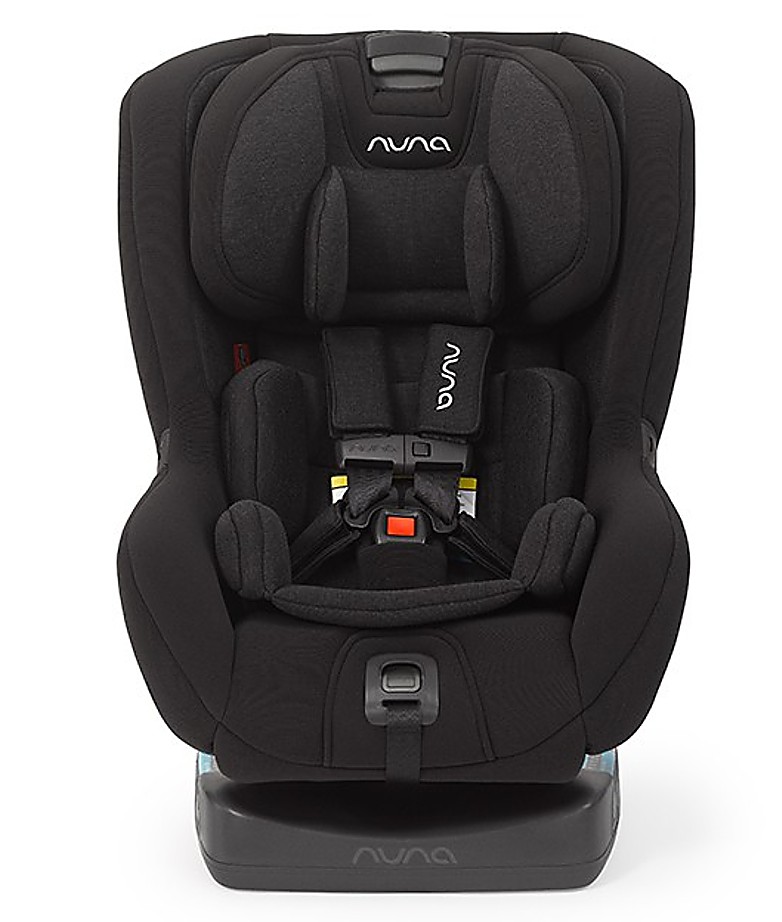
Before evaluating an older Nuna RAVA’s fabric, legroom or installation, check whether the individual seat is included in the harness-adjuster recall. That is the first practical step for an owner, a family receiving a used seat or anyone considering remaining older stock.
The RAVA is a rear-facing and forward-facing convertible. It does not become a booster. Its appeal should be judged through the harness years: how it fits the child, how it installs in the vehicle and whether caregivers can operate it consistently.
Resolve the recall by model and date
NHTSA recall 24C002 concerns certain RAVA seats made between July 2016 and October 2023. The manufacturer’s owner notice filed with NHTSA explains that debris at the front harness adjuster can allow the harness to loosen and describes the remedy.
Use the seat’s identifying label and Nuna’s recall resource to determine the required action. Follow the current manufacturer instructions for checking the harness and obtaining the remedy. If the harness does not hold as required, stop using the seat and contact Nuna. Do not improvise a repair, lubricate the mechanism or assume that a replacement cover of unknown origin completes the recall.
Keep the remedy record with the manual. When a seat changes households, clear documentation is much more useful than a seller’s general statement that it is “fine.” Our used-car-seat guide covers the other history and condition questions to resolve.
Evaluate the RAVA as a convertible
A family choosing RAVA should plan for a separate booster when appropriate. That later purchase is not a defect in the plan; it allows booster fit to be evaluated when the child’s size and vehicle are known.
Compare the RAVA with the original Nuna EXEC guide if an all-in-one is also on the shortlist. Consider whether the additional stage and equipment are useful, rather than assuming that either a larger feature list or a premium finish predicts the best fit.
Try the installed position before buying
With the vehicle parked, set the front seats for their usual occupants and install RAVA at the permitted rear-facing recline. Check the loading route through the door and the adult’s reach to the harness adjuster. If another restraint shares the row, include it in the trial.
There are two separate space questions: whether the restraint installs correctly, and whether the family can use the remaining space comfortably. A workable installation behind the passenger may still be inconvenient if that position is needed by a tall adult every day. Repeat the evaluation in each regular vehicle.
Understand the True Tension system
The RAVA manual gives the belt routing and True Tension door procedure for the chosen mode. Read the entire method, including how the vehicle belt is secured. A closed door should not be treated as proof that every installation step has been completed.
For forward-facing harness use, identify the proper top-tether anchor in the vehicle manual. Store equipment not used in the chosen configuration as directed, so loose connectors do not interfere with the installation or become confusing during a later move.
If the system is unfamiliar, ask a qualified technician to help the caregiver learn it. The goal is a process the caregiver can repeat, not an installation that only the person at the appointment can reproduce.
Make maintenance part of normal use
Keep food debris out of the restraint and follow the model’s cleaning instructions. The cover, harness, buckle and adjustment hardware may require different care. Instructions associated with a recall remedy should be kept distinct from routine cover washing.
Periodically recheck the child’s fit, the allowed configuration and all outgrowing criteria. The seat’s overall maximum does not replace the limit for the mode being used. The extended rear-facing guide explains how to compare capacity without turning a headline number into a promise of years of use.
RAVA can be evaluated sensibly once the individual seat’s recall status is resolved and its actual installation is understood. Give those concrete checks priority over styling, brand reputation or an old review’s enthusiasm.