Editorial update · Updated October 19, 2026. This page has been rewritten; historical models and events are identified in the text.
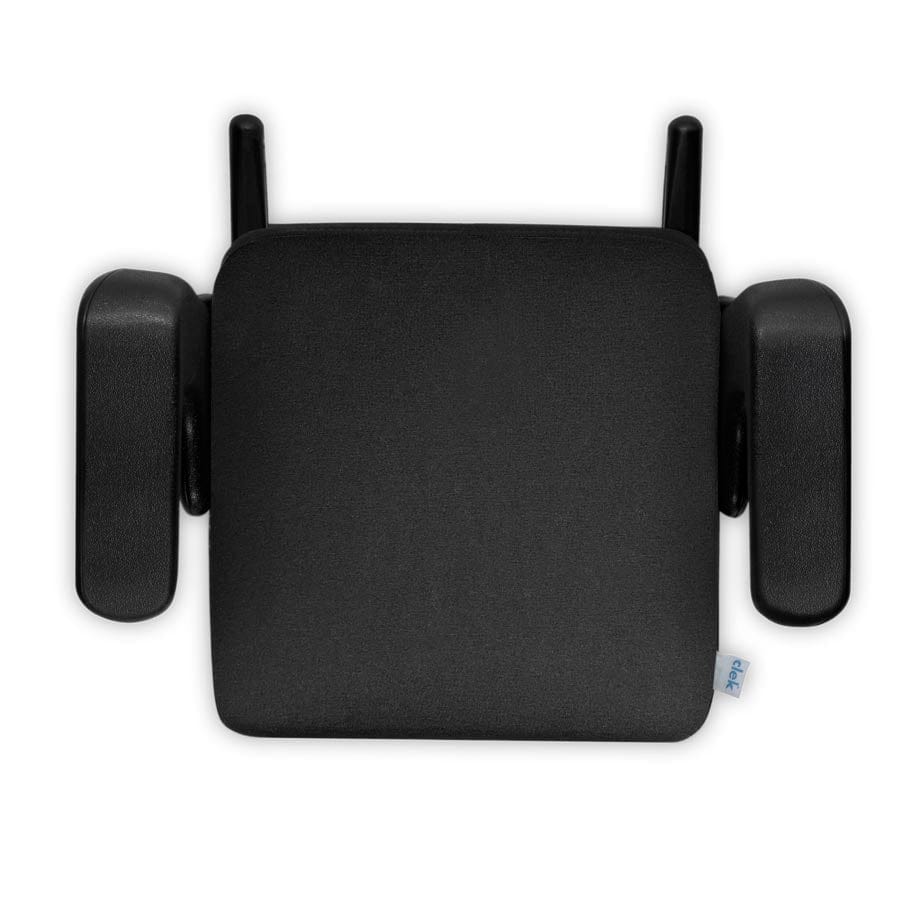
A backless booster can be convenient to carry and share between vehicles. Its small size does not make it a universal solution. It relies on a suitable vehicle lap-and-shoulder belt and the required support from the vehicle seat back or head restraint.
Confirm the vehicle arrangement first
NHTSA describes a backless booster as a way to raise the child for correct belt fit, without supplying its own head and neck support. Read the booster’s and vehicle’s instructions together. A lap-only belt is not a substitute for the lap-and-shoulder belt a belt-positioning booster requires.
Compare belt fit with the actual child
Have the child sit naturally against the vehicle seat, with the belt routed as directed. Look at the lap belt across the upper thighs and the shoulder belt across the chest. If a positioning clip is included, use it only according to that model’s instructions. A clip is not a remedy for a child who cannot remain seated correctly.
Think beyond the empty-seat footprint
A narrow booster may still be difficult to buckle between two neighboring car seats. The child’s hands need access to the buckle, and the belt must move freely. Try the arrangement without shifting or loosening another restraint simply to reach the latch plate.
Make portability a complete plan
A spare booster is useful only when the receiving adult understands how to use it. Keep the manual with the seat or save the official model-specific instructions. Before a carpool or taxi journey, confirm there is an appropriate seating position at the destination; do not assume every vehicle has equivalent support or belt geometry.
Know when another option is better
A high-back booster can be worth investigating if its belt guidance or support works better for the particular child and vehicle. A harnessed restraint remains a different stage, rather than a bulkier version of the same thing. The booster readiness discussion helps separate those questions.
Compare the high-back category and read the Olli and Ozzi label-recall article if those historical models are on your shortlist. Check recalls by exact model and production information, especially for a hand-me-down. Secure a booster when empty according to its instructions so it does not remain loose in the vehicle.