Editorial update · Updated October 19, 2026. This page has been rewritten; historical models and events are identified in the text.
A rotating car seat can bring the harness toward the door, making a difficult reach more manageable. The useful comparison is not simply which product turns the farthest. Ask when it rotates, how it installs and whether the movement fits the actual doorway and neighboring passengers.
First identify the job you need rotation to do
Some families want easier rear-facing loading. Others are considering a swivel because of a caregiver’s reach or mobility limitation. Describe that specific problem and test it in the vehicle. A feature can be impressive in a shop while offering little benefit through a low roof or narrow rear door.
Compare the functions, not just the names
| Family | Rotation and modes to investigate | Important distinction |
|---|---|---|
| Baby Jogger City Turn | Rear-facing loading rotation; rear- and forward-facing harness modes | Do not assume forward-facing rotation or booster conversion. |
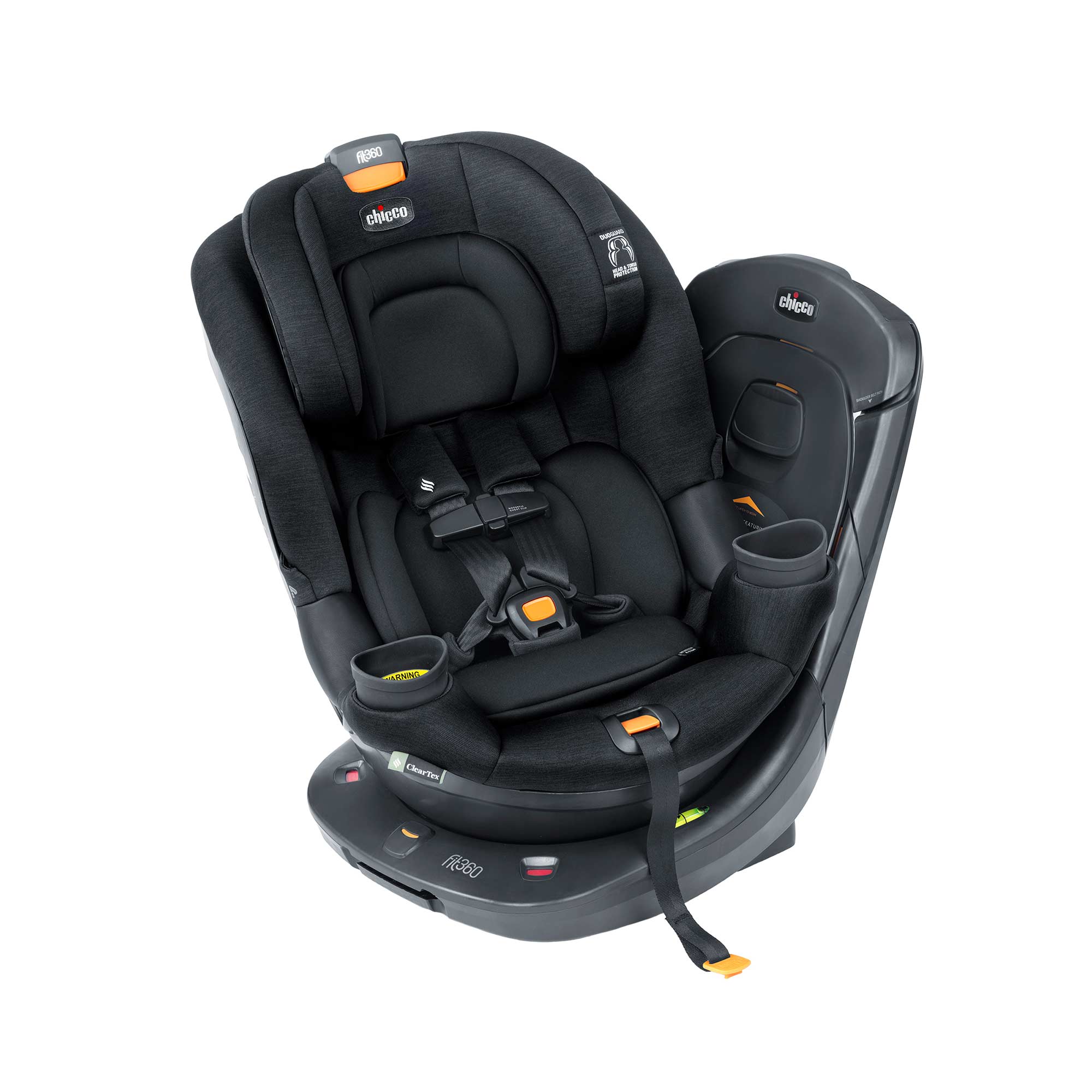
| Chicco Fit360 ClearTex | 360-degree rotation; rear- and forward-facing harness modes | Check the exact Fit360 generation and its installation instructions. |
| Evenflo Revolve360 all-in-one / Extend | Rotating designs with harness stages and a later high-back booster | Original and Extend labels do not carry identical limits. |
| Evenflo Revolve360 Slim | Rotating rear- and forward-facing harness modes | Slim is a two-mode design, without the all-in-one’s booster stage. |
Compare a full installation demonstration
Ask to see the vehicle-belt or lower-anchor method you will actually use, including any required tether. Different brands use different tensioning, locking and indicator systems. Do not blend those procedures into one assumed “rotating seat” method.
Practice returning the shell to its approved travel position and checking the lock. Turning toward the door is a loading step; it does not establish a side-facing driving mode. Every caregiver should know how to confirm the required position before a trip.
Look beyond advertised width
The space occupied during rotation can differ from the width of a seat sitting still. Neighboring shells, armrests and vehicle trim can interfere with movement. Install adjacent restraints independently and check the whole arrangement rather than forcing a swivel through a gap.
Also review front-seat clearance at the recline the child needs. A vehicle that accommodates a more upright older child may leave less space for another permitted configuration. The correct trial uses the current child’s requirements.
Keep growth and stage changes separate from convenience
A child should not turn forward merely because the seat can rotate there. Follow all fit limits and applicable guidance for the appropriate mode. If a product offers a booster, reassess belt fit and readiness when that later stage arrives.
Several model families have changed limits or equipment across manufacture periods. Record the full model and date and use the matching manual. A current comparison cannot rewrite the label on a seat already owned.
Consider upkeep and moving between cars
Review how the cover is removed and reinstalled and what the manufacturer says about the mechanism. Use only approved cleaning methods. A rotating seat can add loading convenience while remaining bulky to transfer between vehicles; practice that separate task if it is part of the daily routine.
Make the decision with the caregiver present
Invite the person who struggles with loading to try each candidate. Compare the reach, harness adjustment and lock check from their position. If a conventional seat fits better or creates a simpler routine, rotation is not an essential purchase. If a rotating design solves the access problem and meets all installation and fit requirements, its benefit is concrete and easy to explain.
Explore the next question
Read the City Turn guide · Read the Fit360 guide · Compare Revolve360 variants