Editorial update · Updated October 19, 2026. This page has been rewritten; historical models and events are identified in the text.
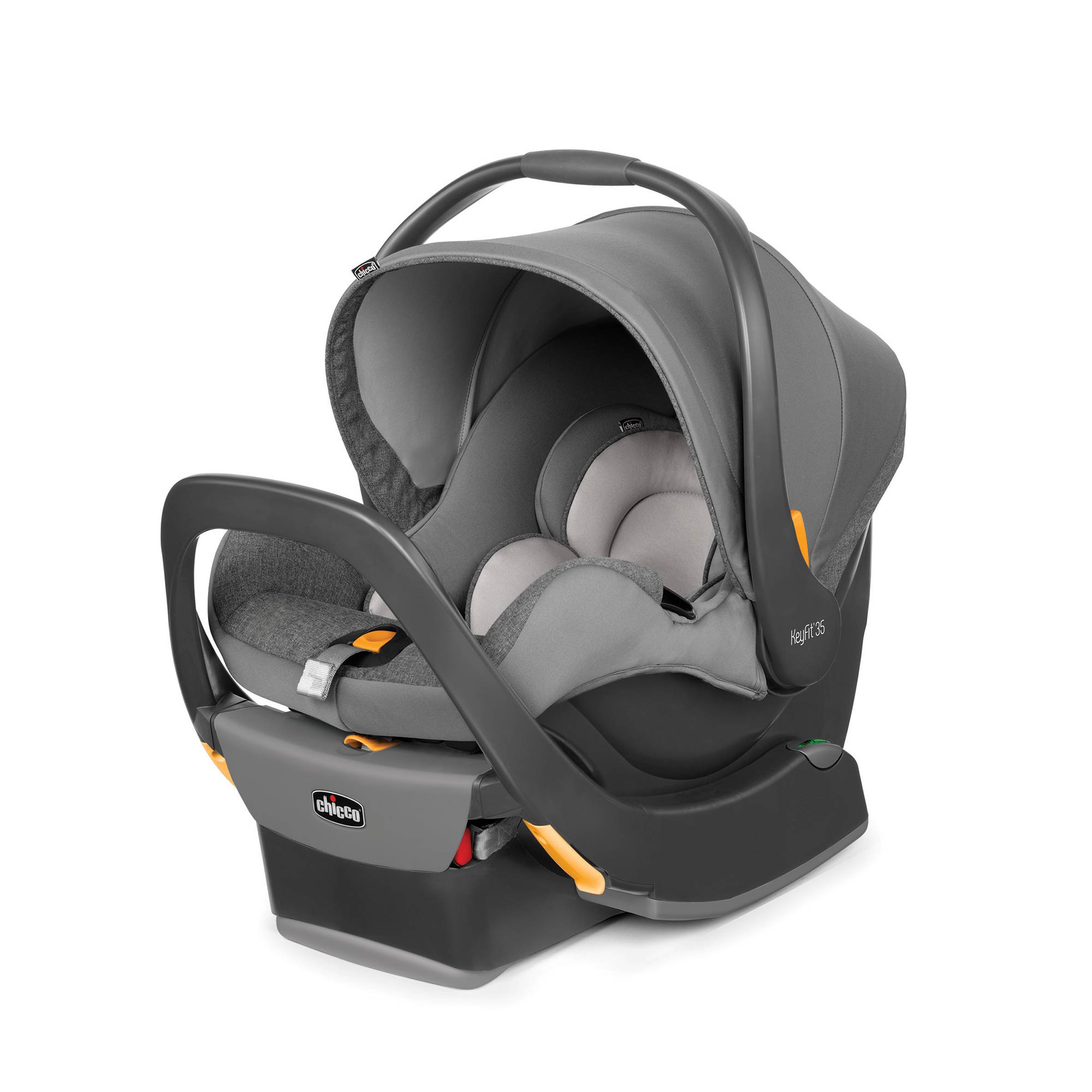
The Chicco KeyFit 35 is a rear-facing-only infant seat built around a removable carrier and a stay-in-car base. Its appeal is the way several adjustment and installation features fit into an everyday travel system. Evaluate those features with the baby, vehicle and caregiver in mind rather than choosing solely by the number in the name.
What distinguishes the KeyFit 35 arrangement
Chicco’s product information identifies an adjustable headrest with a no-rethread harness, an anti-rebound bar on the base, installation aids and a carrier-only belt route. The listed carrier weighs about ten pounds, separate from the base. Those details describe the standard KeyFit 35 discussed here; confirm the exact trim and manual for the product being considered.
The presence of a KeyFit name on another base does not establish that the carrier can use it. Check the manufacturer’s specific compatibility information before mixing pieces or buying a spare base. The same rule applies to stroller adapters.
Use the headrest adjustment as part of a fit check
A no-rethread harness can make adjustment more convenient, but the caregiver still needs to select the correct position for the baby. Follow the manual for harness height, permitted inserts and the fit limits that apply together. Do not add a separate head support because a photo makes it look comfortable.
As the baby grows, check fit again instead of waiting only for the weight maximum. Body proportions differ, and another limit can be reached first. A longer usable carrier period is convenient only while every requirement is satisfied.
Compare the base routine in your vehicle
Learn the method you intend to use, including the base’s angle indicator and the belt or lower-anchor procedure. Chicco identifies SuperCinch for the lower-anchor arrangement and LockSure for vehicle-belt installation. Treat the instructions for each method as a complete sequence; do not combine steps simply because two mechanisms seem helpful.
Try loading and releasing the carrier with the front seat in its normal position. Check how easily the adult can reach the release and place the carrier without twisting awkwardly. A properly installed base still has to support a workable routine for the people using it.
Plan carrier-only trips separately
The KeyFit 35 supports an instructed carrier-only belt installation. Practice the exact route before using a taxi or another car without the base. A belt route from a KeyFit 30 or another brand should not be assumed identical.
If the trip includes a flight, check the aircraft-use section of the matching manual and the airline arrangements. Carrying an infant seat to the airport is only one part of the plan; decide how it will be used aboard and how the child will travel after landing.
Think about carrying and cleaning
Lift the empty carrier during a demonstration and consider the additional weight of a growing baby. If the carrier will usually be placed on an approved stroller, test that connection too. The convenient arrangement for a short parking-lot walk may differ from one involving stairs or longer distances.
Read cleaning instructions before the first spill. Chicco separates care for fabrics, plastic parts and harness webbing; a washable cover does not mean the harness can go in the washing machine. Keep sufficient time for correct reassembly and drying before the next trip.
When to put it on your shortlist
The KeyFit 35 is a useful candidate when a removable carrier, its adjustment system and the compatible travel arrangement suit the family. Compare it with another infant model in the actual vehicle rather than assuming a familiar brand will fit everywhere. If the baby needs individualized medical travel guidance, involve the appropriate team before purchase or use.
Explore the next question
Compare infant seats · Read about the SnugRide 35 Lite LX · Plan travel for a small or premature baby