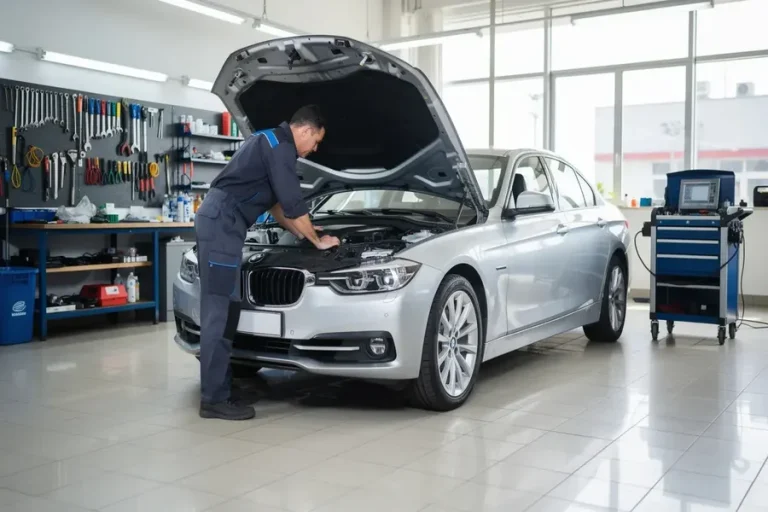
Your check engine light comes on 40 miles from the nearest dealership, and the only shop in town has a waiting room with three chairs and a coffee pot from 1998. This is the moment most drivers start guessing. I’ve been on both sides of that counter, as a customer and as someone who spent years working around service bays, and the shop that looks the least polished is often the one you want.
Small towns narrow your options, which actually makes the search easier once you know what to test. You’re checking four things: how the shop documents work, how it handles warranty calls, how it treats the estimate, and how it behaves when a repair doesn’t stick. Get those right and the coffee pot stops mattering. If you already drive a domestic brand and want a shop that knows the platform, Ford Repair Services in Cortez, CO, is the kind of dedicated service center worth calling before you walk into a general garage.
Here’s the part that trips people up. A dealership group and an independent garage are not the same animal, and neither is automatically better. The question is which one fits your car and your calendar.
Does the shop actually specialize in your vehicle?
A general mechanic can change your oil and your brake pads. A platform specialist knows the quirks of your specific model, the recalls that get missed, and the diagnostic codes that show up on your dashboard. Those are different skill levels, and the gap only widens as cars get more computerized.
Ask a blunt question when you call: which vehicles do you work on most weeks? If the answer is a brand family, good. If the answer is “anything that rolls in,” expect a shop that guesses more than it tests. That’s not a knock on generalists, who are often the only realistic option for simple jobs and quick turnaround. It’s a matter of matching the job to the bay.
The U.S. auto repair and maintenance industry employs hundreds of thousands of people, according to the Bureau of Labor Statistics, which means supply isn’t the problem in most towns. Fit is. A shop staffed with techs who trained on your platform will finish your job faster and charge you less diagnostic time.
The template your mechanic should hand you
I use a simple five-part test before I hand over keys anywhere, and it fits on one index card. Call it the Written, Warranty, Wait, Worker, and Word test. The name is mine, but every piece of it comes from things that have burned real drivers.
- Written. You get a printed estimate with parts, labor, and tax split out before anyone touches the car. No verbal ballparks.
- Warranty. The shop states its parts and labor warranty in plain language on the estimate, in months or miles, before you sign.
- Wait. They tell you when the car will be ready and call you if that changes. A shop that goes silent on day two will go silent on a comeback too.
- Worker. You can name the person who will actually be under your hood, not just the service writer at the desk.
- Word. Ask two neighbors who they use and why. In a small town, word travels faster than any review site, and it usually tells you more.
If a shop fails the first two, walk. Those aren’t preferences. They’re the difference between a repair you can plan for and a surprise you can’t contest.
What the estimate tells you before the work starts
The estimate is a personality test. A good one lists a part number or at least a brand name, separates labor from parts, and gives you a line for diagnostic time. A bad one is a single round number scribbled on a carbonless pad.
Watch for the upsell drift, where a brake job turns into a fluid flush and a cabin filter before anyone has finished inspecting the brakes. Some of those extras are legitimate. Many aren’t urgent. Ask the writer to mark each line as required, recommended, or optional. A shop confident in its work won’t flinch at that request. Here’s the thing I’d push hardest on: get the estimate in writing before you leave the counter, even for a small job, because memory is a terrible receipt.
Warranty, comebacks, and the paper trail that protects you
Every state sets its own rules for repair shop registration and consumer protection, and those rules are where most disputes get settled. It’s worth knowing the general baseline. The National Highway Traffic Safety Administration maintains recall and safety data for vehicles and equipment, so you can check whether your issue overlaps with an open recall before you pay a shop to fix it.
Now the comeback test. When a repair fails within warranty, does the shop take the car back without argument? A shop that honors its own warranty is telling you something specific: it expects the work to hold. A shop that stalls, blames the part, or suggests you find the manufacturer is telling you the same thing in reverse.
Keep a folder. Save the estimate, the final invoice, and any text messages about the job. When I’ve had to push back on a repair, the shop that resolved it fastest wasn’t the friendliest one. It was the one whose paperwork matched reality.
When to use a small-town shop and when to drive
Here’s my honest split. For routine maintenance, brakes, tires, and a generalist-appropriate repair, the local independent is almost always the right call. You get daily service, a familiar face, and reasonable prices. For complex diagnostics, transmission work, or a vehicle still under a manufacturer warranty, the platform specialist is worth the drive.
Regulations vary widely, and the Environmental Protection Agency sets national baselines for how shops handle waste and emissions equipment, so a shop’s housekeeping tells you something about how it operates. Ask how they dispose of used oil and refrigerant. The answer separates professionals from the rest.
A quick pre-visit checklist
Before you commit to a shop, run these seven checks in one phone call. It takes about ten minutes and saves you weeks.
- Ask which brands they see most often, and listen for a specific answer.
- Request a written estimate with parts and labor separated.
- Ask for the warranty in months or miles, out loud.
- Confirm who will do the work and whether they’re certified.
- Ask how they handle a comeback within warranty.
- Get the diagnostic fee in writing before drop-off.
- Read the last three local reviews for patterns, not one-star rants.
A trustworthy shop answers all seven without irritation. That’s the tell.
Pick the shop that documents, not the one that charms
Small-town car repair comes down to a simple idea. The shop that puts everything in writing has already agreed to be held to it. The one that keeps things casual has kept its options open. You want the first kind, even if the waiting room smells like burnt coffee. Call ahead, ask your seven questions, and walk in with your checklist. If you can name the tech, the warranty, and the number, you’ve already done the hard part. What’s the last repair you paid for, and could you have repeated the estimate back a month later?