Editorial update · Updated October 19, 2026. This page has been rewritten; historical models and events are identified in the text.
A combination car seat starts as a forward-facing harnessed restraint and later becomes a belt-positioning booster. It can be a useful purchase after rear-facing travel, especially when a child still needs a harness but is approaching the stage when a booster will eventually make sense.
The best car-seat booster combo for a household is the one that handles both jobs well in the actual vehicle. A high final weight limit, an attractive cover or a long list of modes cannot establish that by itself. Begin with the child’s current needs and make a separate plan for the later stage.
Confirm that this is the right category
A combination seat does not provide rear-facing use. If the child still needs a rear-facing restraint, compare appropriate convertibles or all-in-ones instead. NHTSA’s seat-selection guidance is a starting point for understanding the progression of restraint types.
Do not confuse a harness-to-booster seat with a booster that has no harness. Retailers sometimes place both in the same broad category. Look at the actual product description and manual to see how the child is restrained in each mode.
Likewise, distinguish a minimum from a recommendation to transition. A child can satisfy a printed booster minimum while still being unable to remain correctly seated throughout a journey. The booster-readiness guide explains the behavior and belt-fit questions that matter.
Make the first comparison about usable harness room
Measure the child and check every requirement for harness use. Then try the seat with the child present. Standing height and weight are useful screening information, but torso proportions and the available harness positions affect the real fit.
Ask how much adjustment remains and whether the child can sit comfortably without changing the intended posture. Check the adult’s access to the buckle and tightening strap. An adjustment system should be manageable with the seat installed, not only when it is standing on a shop floor.
If several children will share a seat on different days, consider how frequently settings must change. A convenient adjustment can be valuable, but each child still needs the correct configuration before the trip.
Compare models by the problem they might solve
The following examples provide different ways to approach the category. Use the current label and matching manual for the exact version; some manufacturers have changed minimums and other details over time.
| Model family | Reason to investigate | Decisive practical check |
|---|---|---|
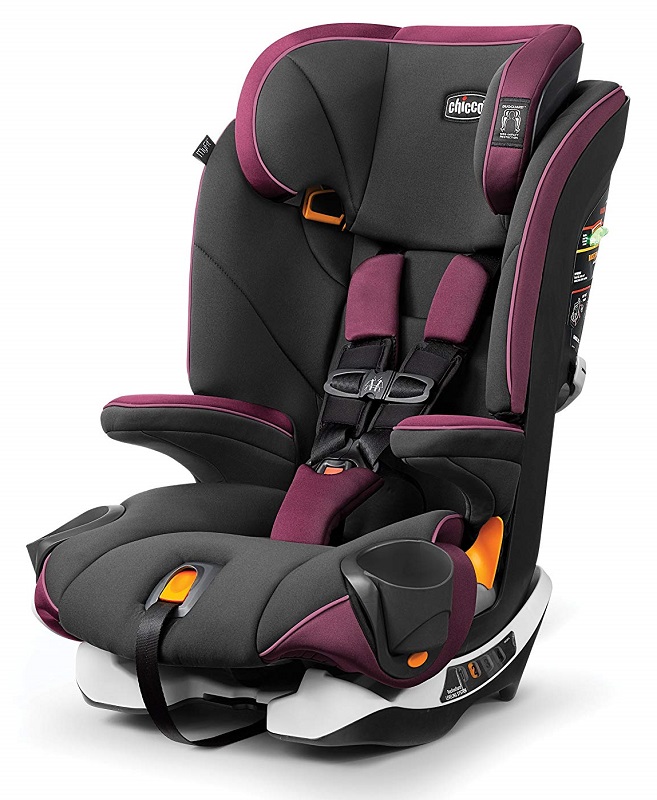
| Chicco MyFit | A dedicated harness-to-high-back-booster design with its own installation and recline system. | Try the prescribed recline, harness adjustment and later shoulder-belt route in your vehicle. |
| Britax Grow With You ClickTight | A version with a belt-installation system that may help caregivers who regularly install a seat. | Have the regular caregiver repeat installation and check the space beside neighboring restraints. |
| Graco Tranzitions | Harness, high-back and backless stages within the same family. | Assess the current harness fit first, then treat both booster arrangements as separate future fittings. |
| Cosco Finale | A straightforward harness and high-back-booster option to investigate on a limited budget. | Check the exact model’s eligibility and usable growth room before comparing prices. |
| Evenflo Maestro Sport | Another two-stage option for a regular or additional caregiver’s vehicle. | Keep the harness capacity distinct from the larger booster figure and try the belt fit when conversion is appropriate. |
Read the MyFit guide, Grow With You guide and Tranzitions guide for fuller model-specific questions. The manufacturer sources below identify the products and instructions behind this comparison.
Test installation before assigning value to convenience
Choose the intended seating position using the vehicle manual. Identify the correct top-tether anchor and inspect the belt and buckle arrangement. Follow the restraint’s complete method, including lower-anchor limits and the approved alternative when those limits are reached.
Practise removal as well as installation. If the seat will move for a carpool, the next caregiver needs the instructions and the ability to repeat the process. A low carrying weight does not compensate for an installation that nobody in the household can reliably reproduce.
For three across, bring all the restraints. Check independent installation, permitted contact and every passenger’s buckle access. Published width is useful for narrowing the shortlist, but cannot validate the final arrangement.
Treat the booster stage as a new responsibility
When the child is ready and eligible, follow the conversion instructions carefully. Store removed components together. In booster mode, verify that the lap-and-shoulder belt follows the correct guides and remains properly positioned as the child settles and moves normally.
Check whether the child can buckle without twisting the belt or disturbing a neighboring seat. An adult should verify the result each time. If the belt hangs up in the guide or the vehicle head restraint interferes, resolve the fit according to both manuals.
A combination seat can be a good harnessed purchase even if another booster eventually works better. Future vehicle changes and the child’s growth are difficult to predict. Avoid extending an unsuitable configuration solely to fulfill an original plan to use every mode.
Choose a complete, supportable package
Include instructions, approved parts, cleaning requirements and the return policy in the comparison. For a used seat, establish its full history, service life and recall status before a fit trial. For a new seat, record the model information and complete registration.
After a successful installation and child fit, compare price and convenience. That order makes the decision more durable: the family knows what the seat must do, which models actually do it and which added features make the daily routine easier.