Editorial update · Updated October 19, 2026. This page has been rewritten; historical models and events are identified in the text.
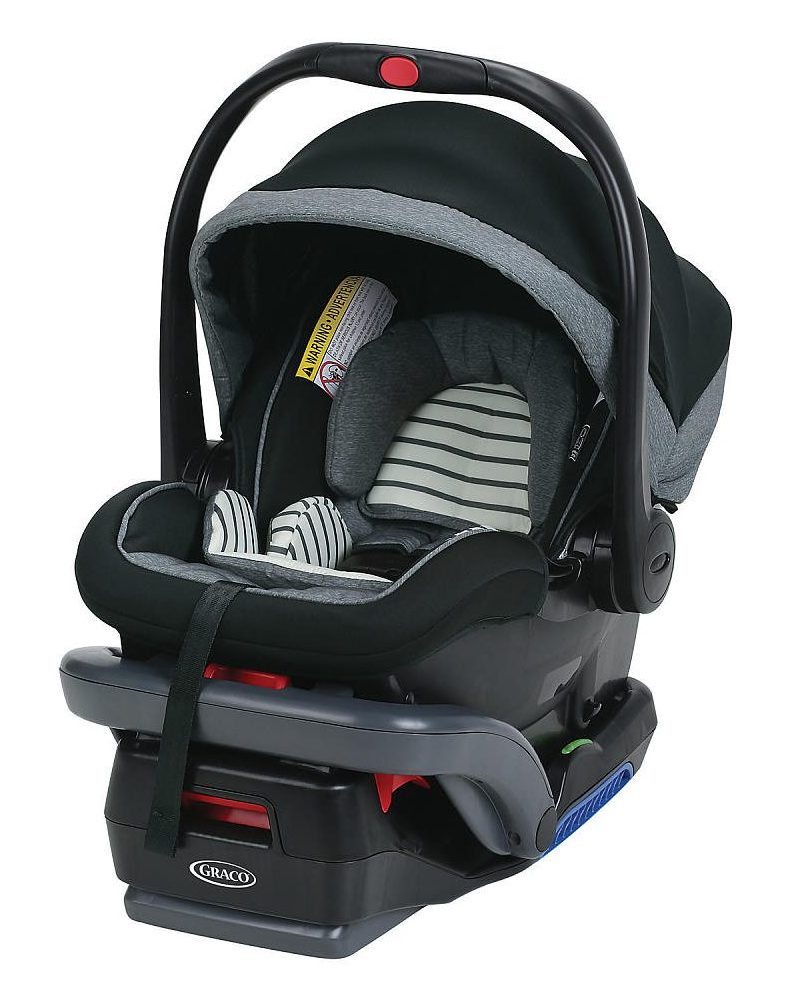
The SnugRide SnugLock 35 DLX is an earlier Graco infant-seat model whose appeal centers on how the base is installed. For a family using one car frequently, an understandable base installation can be more useful than a long list of trim features. For someone buying an older example, correctly identifying both pieces is the first priority.
Graco has used SnugRide, SnugLock, SnugFit, DLX and other names in many combinations. They are not interchangeable instructions. In particular, this older SnugLock 35 DLX article should not be read as a specification sheet for a current SnugFit DLX, a Lite LX or a newer base with different equipment.
Identify the carrier and base separately
Look for model and manufacture labels on the carrier and its base. Record both before downloading instructions or ordering another base. A familiar logo and an apparently successful click are not enough to establish that two pieces are an approved combination.
The Graco instruction finder is the appropriate place to match those details. If a used bundle contains a different base from the one pictured in an old listing, ask Graco to verify the pairing. The practical risk is not simply purchasing the wrong accessory; it is building an installation around instructions for the wrong product.
Why the base deserves a separate trial
SnugLock is the installation feature emphasized in this model’s name. Treat its operating sequence as a complete process to learn, not a shortcut that removes other checks. The seating position, belt or anchor method, recline indicator and final carrier connection still need to follow the matching guide.
In your own vehicle, see how easily you can reach the release and carry the seat through the door opening. A base can be simple to secure while the daily lifting angle remains awkward. Try this with the front seat in the position the adult actually uses; a demonstration with it pushed fully forward may exaggerate the available room.
Think beyond the empty carrier
Infant carriers become less convenient to carry as the child grows. Rather than comparing only an empty-seat weight, consider the total lift and the distance between your car and home. Stairs, an upstairs apartment and parking away from the entrance can change the value of a carrier-and-stroller arrangement.
Also consider what will happen at the destination. A matching stroller can simplify moving between places, but car-seat and stroller compatibility must be confirmed for the exact models and approved adapters. Buying an accessory because its name includes “Graco compatible” is not a substitute for that check.
Compare an older DLX with a simpler alternative
The SnugRide 35 Lite LX guide provides a useful comparison if low carrying effort and a simpler feature set are your priorities. Start with the same questions for both: can you install it correctly, adjust the child fit easily, handle the loaded carrier and clean the required parts?
If the child will move into a convertible soon, the remaining time you expect to use an infant carrier may matter more than a small difference in trim. The infant-seat comparison page can help organize that decision without treating the highest advertised limit as a promise of how long every baby will fit.
Check history before accepting a bargain
For an older SnugLock 35 DLX, establish remaining service life, recall status, complete components and crash history. Confirm permitted inserts and replacement parts through the manufacturer. Avoid adding padding to solve a fit concern or assuming the included head support must remain in place indefinitely.
Consult the used-car-seat guide when a seller cannot document those basics. A sound purchasing decision should leave you with an identified, supported restraint and a repeatable routine—not just a premium model name at a lower price.