Editorial update · Updated October 23, 2026. This page has been rewritten; historical models and events are identified in the text.
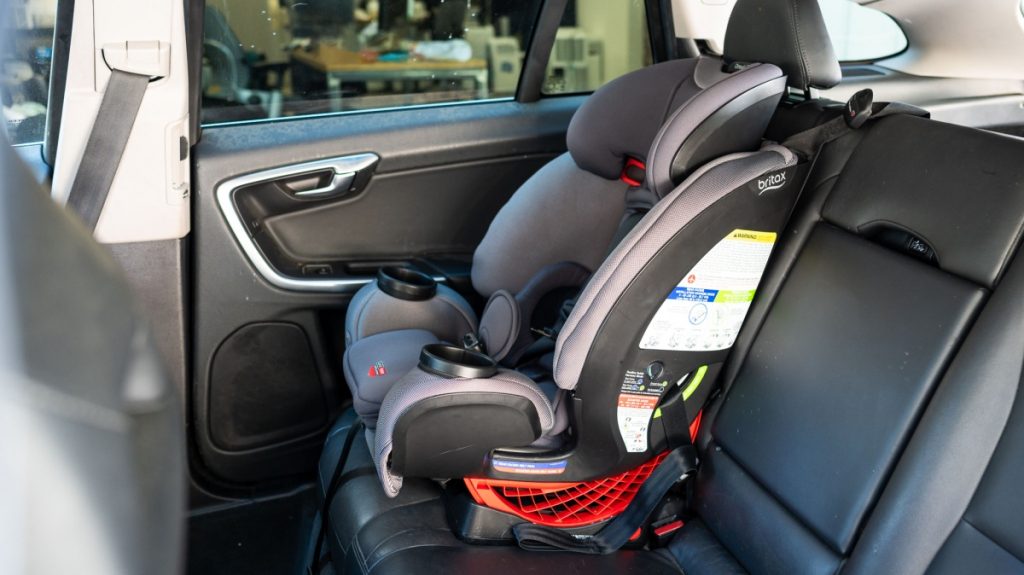
The Britax One4Life combines rear-facing harness, forward-facing harness and high-back booster use in one restraint. That can simplify shopping, but the three stages should still be assessed individually. A seat that fits well for a toddler today is not a promise about exactly how a future school-age child will fit its booster.
One4Life ClickTight and One4Life Slim are also distinct product names. This guide focuses on the original One4Life family and the questions worth asking before buying or continuing to use a particular example. Identify the label and model number before following an online demonstration.
The appeal of an all-in-one
Britax’s One4Life description explains its three-mode design and ClickTight installation. The practical attraction is keeping a familiar restraint through multiple changes in the child’s needs. A caregiver may prefer learning one product’s controls and storing one set of mode-specific parts.
The trade-off is committing to a physical seat that must work in the car now. Do not compromise the current installation or front-passenger space simply to obtain a booster function that may not be used for several years. The all-in-one buying guide explains how to compare that future value against a separate convertible-and-booster plan.
Make the initial fit trial realistic
Set the front seats for their regular occupants, then assess the One4Life at the required child configuration. Include the actual loading route through the door. Can the caregiver reach the harness adjuster? Is it easy to place the child without twisting around another seat? Does the intended adjacent passenger still have usable belt access?
If the restraint will move between vehicles, repeat the trial in each one. A procedure that feels simple in a roomy rear bench can feel different in a compact car or when the anchor position is less accessible. The relevant question is whether every caregiver can carry out the complete correct process.
Match the guide to the model
Britax’s manual library identifies One4Life guides by model information and directs owners of other versions to customer service. That matters because upholstery, supplied components and later revisions can differ even when the headline name remains familiar.
Use the exact guide for child limits, recline, routing and accessory use. An anti-rebound component pictured on one version should not be assumed to be supplied, optional or required on another. Likewise, a current One4Life Slim specification is not a retrofit instruction for an earlier One4Life.
Reassess when changing stages
The transition to forward-facing requires a fresh installation review, including the tether and the appropriate belt path. The transition to booster use requires storing or changing components as directed and checking the vehicle belt on the child. Neither is simply a headrest adjustment.
For the booster stage, consider how the child actually behaves on a longer trip. Can they maintain the required belt position when resting? Is the buckle reachable without threading around another restraint? If a different booster eventually fits better, that does not mean the earlier One4Life use was a poor purchase; needs and vehicles can change.
Cleaning, parts and the real cost of ownership
Inspect how the cover is removed and what the manufacturer permits for each component. Think about the time available for washing and drying before the next trip. A family with one restraint and frequent travel may need a different cleaning plan from one with an approved spare cover.
When replacing a part, use the full model details rather than matching a photograph. Keep removed mode-specific pieces in a labeled place with the instructions so they are available for a later conversion. Check the manufacture label and useful-life rules independently of the date you bought the seat.
Compare against your present needs
Families who mainly need a convertible can compare the Britax Poplar. Those comparing a different multi-stage design can read the Graco 4Ever and DLX guide. Use the same shortlist for each: current child fit, vehicle space, caregiver operation and the usefulness of future modes.
The One4Life’s value is strongest when those practical requirements line up. A longer feature list is less persuasive than a restraint that the whole household can use correctly and comfortably every day.