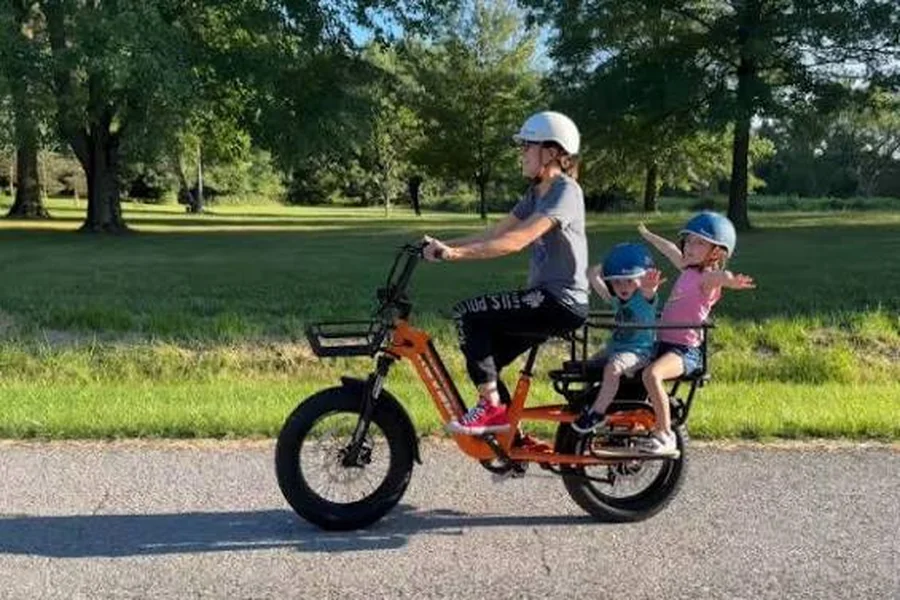
A two-mile ride to school can come down to the three feet between your gateposts. If you’re browsing the family cargo bikes at https://ferlafamilybikes.com/, start by picturing an ordinary weekday. One child is ready, the other has gone back for a library book, and you’re holding the gate open with your hip. Where is the bike? Where can the first child wait? Answer those questions and you’ll have a clearer idea of which bike will earn its parking space.
Start at the garden gate
Open the gate as far as it usually goes and measure the narrowest gap. Include the latch, the drainpipe, and the corner of the recycling bin if that’s where it lives on collection day. Use the bike’s full assembled width for comparison. The Ferla Royce II, for example, has a 25-inch cargo box, but the trike measures 33.5 inches across. In a 36-inch opening, that leaves just 1.25 inches on either side when you approach straight and centered.
Now look at the approach. Can you line up with the opening, or does a wall force you to turn immediately before it? A tape measure can tell you whether the bike fits between two posts. It takes an actual turn to find out whether you can get both front wheels through while the rear wheel is still coming around the bins. If you can borrow a demo bike, this is the first place to take it.
Find out who else uses the parking space
Mark the bike’s length and width on the garage or shed floor with painter’s tape. Leave the outline there for a day. Someone may need to cross it to reach the freezer, or the car door may swing through the space where you planned to leave the cargo box. A spot that requires moving three things to get out and putting all three back when you return adds six small jobs to the school run.
Leave yourself somewhere to stand, too. Imagine you’ve just arrived home with a sleeping passenger and a bag of groceries. From which side would you help the child out? Can another adult get past you to unlock the house? Moving the parking spot a foot to the left might buy you more convenience than an extra shelf or a new set of hooks.
Walk the route at school time
Take a walk along your proposed cycling route on a weekday morning. Pay attention to places where you’ll need to stop, turn, or join traffic. A gate across a path may have plenty of room on the approach and a sharp bend just beyond it. At a busy crossing, look at how much space there is to wait with the entire bike beside you.
Give a slightly longer route a fair trial. Suppose the direct way involves a difficult turn across the school entrance, while the next street brings you to a side gate on the school side of the road. Walk both and time them through to the classroom entrance. An extra block can earn its keep if it gives you a quieter arrival and a place to park within sight of the gate.
Visit the school rack at pickup
The best time to inspect school parking is when everyone wants it. Watch where scooters collect, where families queue, and which way the gate swings. Look for a place where you can reach a fixed rack with your lock and still have space to help a child down. A vacant stretch of railing can look promising until the bell rings and you discover it’s where a class lines up.
Trace your way out as well. If a rack sits against a wall, will you have to walk the bike backward into the crowd? An end space might let you roll straight through. If the obvious spaces are awkward, ask someone who already arrives by cargo bike where they park on a wet afternoon. They may point you to another entrance you’ve walked past for years.
Pack for the busiest day of the week
A schoolbag is an easy shape to picture. A violin case, a cardboard castle, and the coat your child insisted on wearing that morning are more revealing. Choose the most awkward day that comes around regularly and take its gear to a test ride. With the bike parked, try loading everything in the order it arrives after school.
- Backpacks. Fill them as you would for class. Check where they can be secured while keeping feet, buckles, and the way in and out clear.
- Sports kit. Bring the actual kit bag. Find out whether you can reach it at the playing field while a sibling stays seated.
- Lunchboxes and bottles. Pick a spot where an adult can retrieve a leaking bottle without unpacking the whole bike on the pavement.
- Rain gear. Fit any cover you expect to use. Check how you’ll reach each passenger’s harness and where the wet cover will go afterward.
- Groceries. Try a typical shopping bag if you often stop for food after pickup. Put it where it can be secured for the journey home.
Reverse the exercise when you unpack. If the house keys are in a pocket underneath the shopping, you’ll discover that now, while you still have both hands free to rearrange things.
Give each rider a turn
If two adults share the school run, ask each to take the empty bike out, park it, and bring it back. Have each person adjust the saddle and practice starting, stopping, and turning somewhere quiet. Then try the handover you expect during the week. The parent who does pickup should know where the lock key lives and how to set the bike up again after a taller rider has used it.
Children can contribute during a parked trial. Have them try their usual seats with an adult helping them aboard and checking their harnesses according to the manufacturer’s instructions. Ask where their knees touch, whether there’s room for their shoes, and what happens when both wear winter coats. A child who says “my elbow keeps bumping hers” has given you a detail worth more than a photograph of an empty bench.
Time one complete school run
On your trial morning, start the clock when you go to fetch the bike. Stop it when the children reach the school gate and the bike is locked. That includes all the minutes a route planner leaves out. If you have time, do the return trip at pickup, when the bags are in your hands and the children have plenty to tell you.
Notice which parts you’d willingly repeat tomorrow. Perhaps the ride took twelve pleasant minutes and the lock took four frustrating ones. Try the end of the rack before ruling out the bike. Perhaps the children loved sharing the bench, but the turn by the shed defeated both adults. That’s a reason to try a different shape. The right family cargo bike is one you can picture reaching for on a damp Thursday, with the violin by the door and five minutes left to leave.