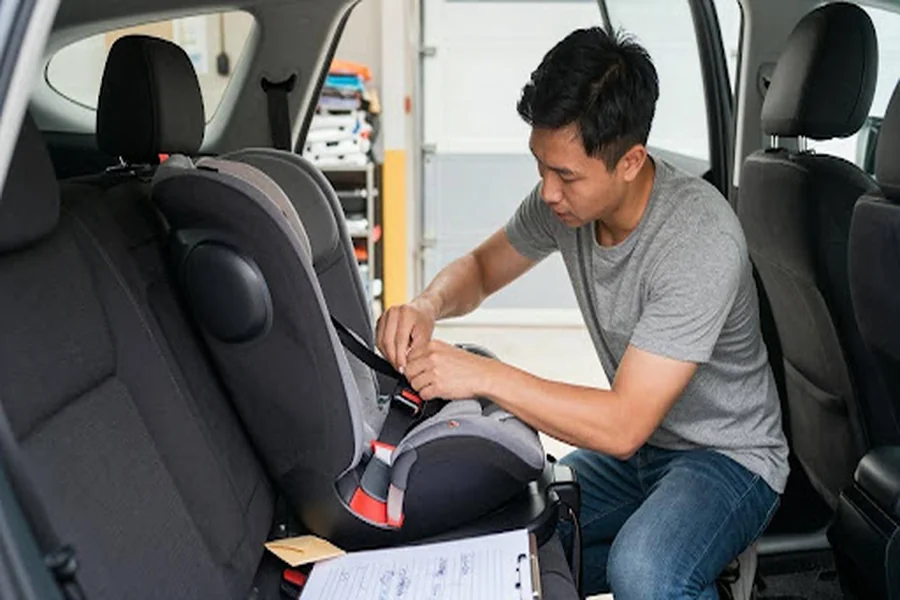
Parents put a lot of effort into choosing the right car seat and installing it correctly. Far fewer keep track of the seat’s paperwork, and that matters more than it seems. A seat that’s appropriate for your child and tightly installed is only part of the picture. You also need to know its history: when it was made, whether it’s been recalled, whether it’s been in a crash and when it expires.
That history is easy to lose. The registration card gets tossed with the box. The seat moves to Grandma’s car, then to a cousin, then into the attic for the next baby. By the time it comes back out, nobody remembers how old it is.
A small record, set up once, keeps that information attached to the seat for its whole useful life.
Treat the seat as a product with a history
Every car seat has a label, usually on the side or bottom of the shell, showing the manufacturer, model name and number, and date of manufacture. Many also show an expiration date or state the seat’s useful life in the manual.
Before you install a new seat, take clear photos of:
- The label with the model number and manufacture date
- The expiration date, if it’s stamped separately
- The cover of the manual
- The receipt
Do this first, because once the seat is installed, the label is often hard to reach. These four photos are the core of your record.
Register the seat, every time
Registration is how a manufacturer contacts you if there’s a safety recall. Without it, you’re relying on hearing about a recall by chance.
You can mail the prepaid card that comes with the seat or register on the manufacturer’s website. It takes a couple of minutes. You’ll need the model number and manufacture date from the label, which is another reason to photograph it.
You can also check for recalls yourself at any time. The NHTSA recall lookup and vehicle safety guidance lets you search for car seat recalls by brand and model and sign up for alerts, and it’s worth checking whenever a seat comes out of storage or changes hands.
Give safety notices a dependable destination
Recall notices and registration confirmations go to whatever email address you gave when you registered. If that’s a crowded personal inbox, or a work address you might not have in three years, the one message that matters can easily be missed.
Some families create an email address just for household safety and product registrations: car seats, strollers, cribs, appliances and vehicles. Both parents can check it, it isn’t cluttered with promotions, and a message arriving there gets noticed. If you’d rather use an existing address, choose one you expect to keep for many years and create a filter that flags messages from the seat’s manufacturer.
Whichever you choose, write the address on the record so that whoever has the seat next knows where notices are going.
Keep only what the record needs
This doesn’t need to be elaborate. One folder per seat, on your phone or in cloud storage, holding:
- The label and manual photos
- The receipt
- The registration confirmation
- Any recall notices and what you did about them
- A short note with the key dates
The note is the most useful part. Something like: “Convertible seat, brand and model, manufacture date, expiration date. Registered to our family safety address. Bought new. No crashes.”
Avoid adding more personal detail than necessary. The record is about the seat, not your family.
Record crashes and replacements
If a seat is in a vehicle during a crash, check the manufacturer’s instructions. Many require replacement after any crash; some allow continued use after a minor one that meets specific criteria. Add a dated note to the record either way, and keep any correspondence with your insurer, since many policies cover the cost of a replacement seat.
If a seat is replaced, expired or damaged, mark the record clearly and dispose of the seat so it can’t be reused. Cut the harness straps and write “expired” or “do not use” on the shell.
Plan for shared caregivers
Seats travel between cars and households. Grandparents, babysitters and co-parents may all install the same seat at different times.
Share the folder with the people who use the seat, and include a photo or link to the installation section of the manual for each vehicle it goes in. A quick note on which seating position and installation method worked best in each car saves everyone time and guesswork.
If you aren’t confident about an installation, a certified child passenger safety technician can check it. Many communities offer free inspection events.
Passing a seat on, or accepting one
Hand-me-down seats can be perfectly safe, but only if the history is known. Before accepting a used seat, you should be able to answer yes to all of these:
- Do I know the seat’s full history, and has it never been in a crash that requires replacement?
- Is it within its expiration date?
- Are the labels, manual and all parts present?
- Have I checked it for recalls?
If the answer to any of them is no or “I’m not sure,” don’t use the seat. This is where the record earns its keep. A seat that arrives with its folder, showing the manufacture date, registration and clean history, is one you can use with confidence. Remember to register it again in your own name so recall notices reach you.
Review at each stage change
Check the record whenever something changes: a move from rear-facing to forward-facing, a switch to a booster, a new vehicle, a new sibling. Confirm the expiration date, run a recall search and update the note.
It’s a few minutes of effort a few times over many years. In return, you’ll always know the answer to the question that matters most about the seat your child rides in: can I trust it?