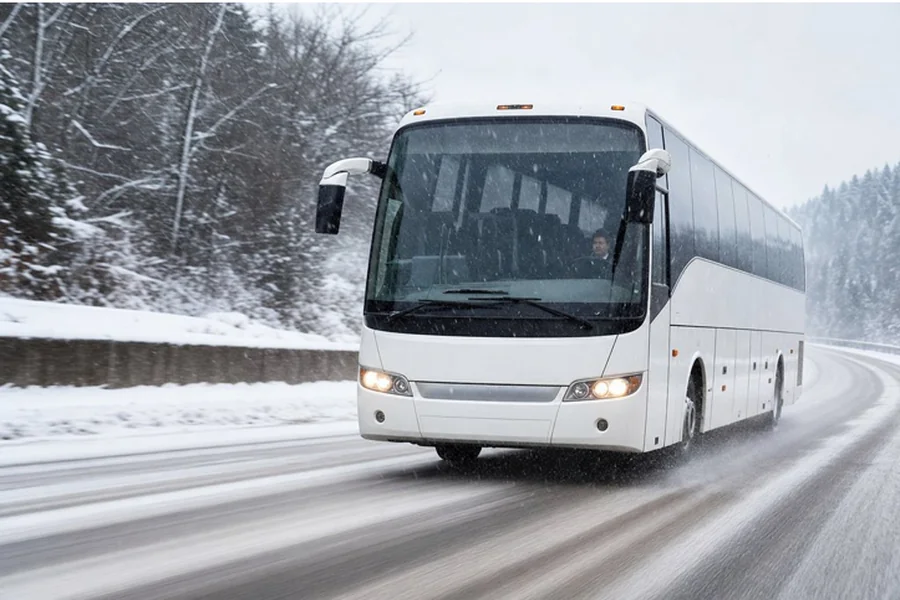
Schedule your pre-winter maintenance before temperatures plummet. This will allow you to catch small problems before they become big ones, avoid last-minute scrambles for parts (think: heaters, batteries, and tires), and give your fleet maintenance team peace of mind.
Documented pre-winter inspection
Yes, you can hop on your bus and take it for a spin to see if everything is working as it should, but a documented inspection performed by a trained technician is your best bet. During this inspection, your technician should assess:
- Overall condition of the bus (don’t forget to look under the bus)
- Heating, ventilating, and air conditioning system
- Battery and electrical system
- Tires (including pressure)
- Fluid levels and conditions
- Wipers, washers, lights, and other items critical to visibility
Remember that all of these components work together to keep your bus, drivers, and passengers safe and comfortable in cold weather. For instance, a bus that isn’t reaching operating temperature efficiently may not be producing enough heat to keep everyone on board cozy. Similarly, a marginal battery might be perfectly acceptable come summer, but in the dead of winter could prevent you from starting up your otherwise reliable diesel bus come morning after it’s been sitting all night in sub-zero temperatures.
Take note of buses that have been in service year-round, especially those that rack up the miles on city routes with a lot of stopping and starting or that have been parked outside over summer. These buses will likely require a more thorough inspection, which is one reason a great shop to service your bus fleet during the cold weather months matters before temperatures drop.
Visibility and Cabin Heat
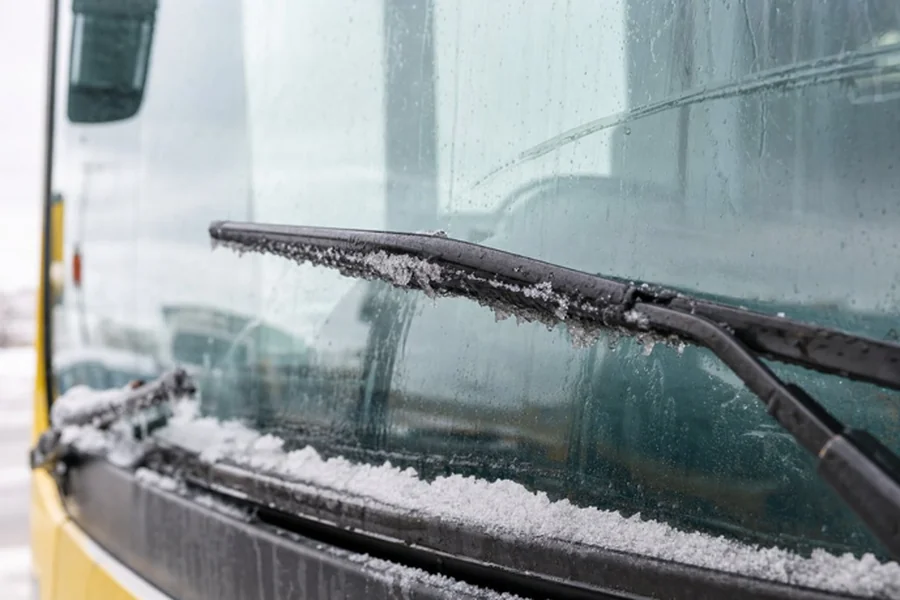
Windshield wipers and washers
- Check wiper blades for hardening, cracking, and other signs of wear and deterioration. Blades that performed adequately in fall’s rainy season may not be up to the task of clearing slush, road salt, and ice come winter.
- Make sure the washer fluid reservoir is filled with winter washer fluid (click here) and inspect nozzles, hoses, pumps, etc. for leaks and other issues.
- Consider keeping a supply of washer fluid and wiper blades on hand, especially if your buses are out on longer routes or travel outside of Edmonton.
Mirrors and thermal windows
- Ensure mirror defrosters (if your buses are so equipped) are in working order; the last thing you want is for a driver to discover on her way to pick up her first route of the day that one (or both) of her mirrors isn’t defrosting properly.
- Thermal windows can fog up when the seal between the panes fails. Check windows for leaks or drafts, ensure latches work properly, and replace or reseal windows as necessary. While fogging can sometimes be controlled using humidity control and ventilation strategies, recurring problems may indicate a more in-depth service is in order.
Bus heaters
- Make sure heater blowers are operating correctly, listen for unusual noises and excessive vibration, and make sure they’re blowing consistently and strongly.
- Check heater vents and ducts for clogs or blockages.
- Inspect hoses, valves, and other components to ensure adequate coolant flow.
- Confirm the thermostat and fan controls are operating as they should.
- Make sure the engine is operating at proper temperatures; a bus can have all functioning heater components and still not heat properly if the engine isn’t operating as it should
Electrical Systems and Tires
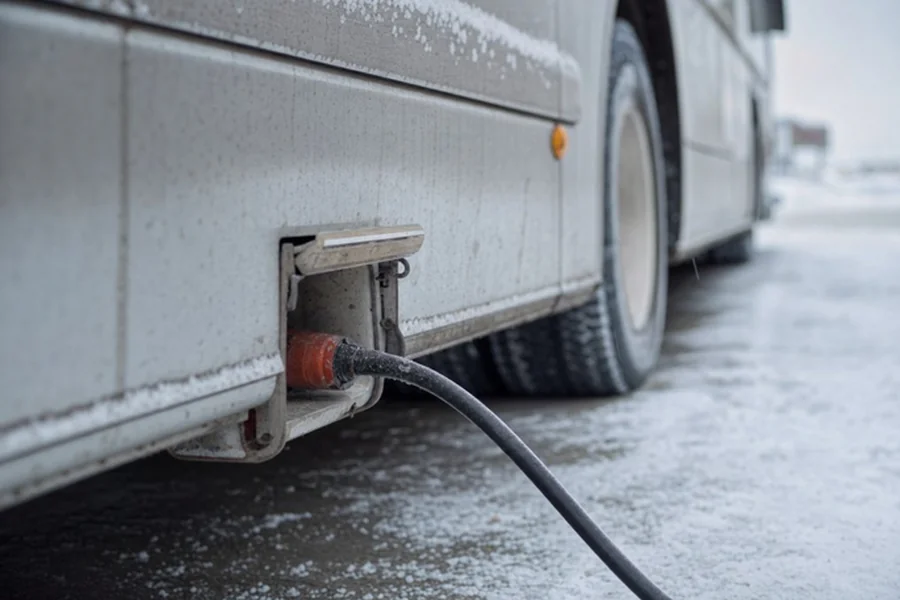
Block heaters and batteries
- Have battery strength checked and replace as necessary; it’s amazing how many seemingly healthy batteries give up the ghost once temperatures plummet.
- Inspect battery cables and connections, clean terminals, and replace cables that are loose, corroded, or have frayed insulation.
- Give block heater cords a once-over, replace any that have damaged plugs or frayed or cut wiring. Make sure they’re stored safely and securely and drivers know how and where to find them.
- Inspect tire tread, make sure winter tires have adequate tread and aren’t showing signs of uneven wear.
- Check tire pressure, as cold weather can result in lower pressure, keep an eye on this. More information at this page: https://www.tyresafe.org/tyre-advice/pressure/tyre-pressures-explained/.
- Make sure all bus lights (including brake lights and marker lights) are in good working order.
- Inspect all exterior electrical connections, these can deteriorate quickly in cold weather, especially when exposed to road salt.
Cold-Weather Fluids
Antifreeze, DEF and oil
- Check DEF levels and top up or replace as necessary. Store DEF properly and make sure DEF system components (heaters, lines, etc.) are in good working order. DEF can freeze in cold temperatures, but buses are designed to deal with this. Don’t ignore warning lights, it may not be just the sensor.
- Top up or replace antifreeze as needed. Have it tested to make sure it will keep your bus protected from corrosion and freezing. Look for discolouration or other signs of deterioration and inspect the radiator cap, hoses, and clamps for leaks.
- Use the proper winter-weight oil for your bus engine, this will help your bus start and provide adequate lubrication in low temperatures. Check oil filters and watch for fuel dilution or other signs of contamination when changing your oil.
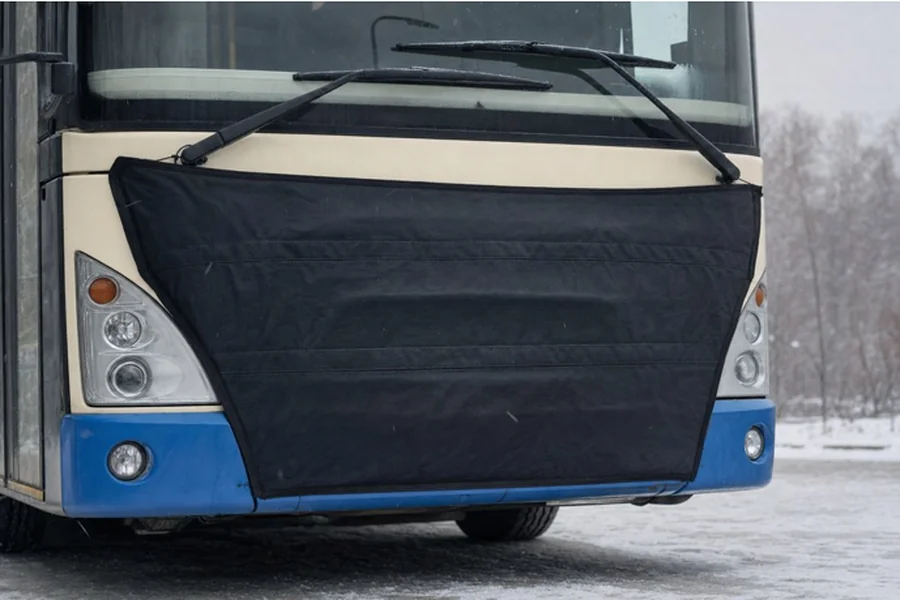
Bus winterfronts
A winterfront is a piece of heavy-duty canvas or vinyl that covers the front of a bus. It reduces the amount of extremely cold air that enters the bus, shields the charge air cooler and radiator from snow and ice, and can help diesel engines reach and stay at proper operating temperatures. If your bus spends a lot of time idling or operating in extremely cold temperatures or on the highway, a winterfront may be for you. Just make sure you use it properly; some buses allow drivers to adjust the amount of airflow when temperatures increase. Make sure your drivers know how and when to use it.
Service Before Freeze
Have buses serviced before it gets really cold so problems can be fixed before they become failures. Batteries can be replaced, heater motors repaired, tires ordered, and cooling system issues addressed before you need your bus the most. Make a list for each bus, keep track of what’s been done and which buses still need attention, and make sure someone follows up.