Editorial update · Updated October 19, 2026. This page has been rewritten; historical models and events are identified in the text.
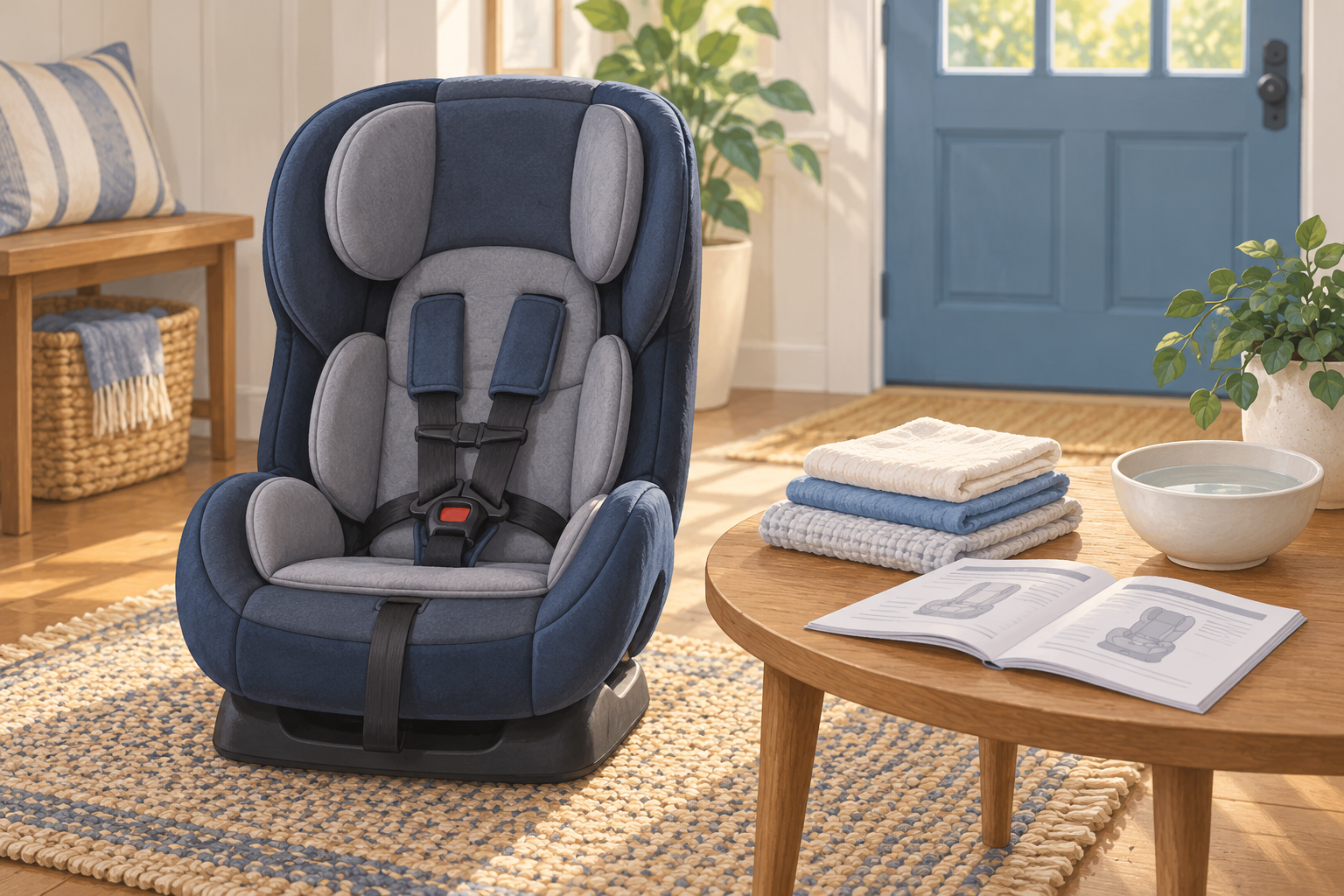
After a child is sick in the car, the immediate goal is understandable: remove the mess and make the seat usable again. A child restraint contains several materials and moving parts, however, and they do not share one cleaning method. A washing routine suitable for the cover may be unsuitable for the harness or buckle.
This page began with questions about coronavirus. The durable answer is to follow the current instructions for the exact seat and component. Cleaning guidance for a restraint is not a promise of medical disinfection, and a household product’s germ-killing label does not establish that it is compatible with safety equipment.
Read the component instructions before taking it apart
Find the model and manufacturing date, then obtain the matching manual from the manufacturer. Photograph the correct assembly before removing an approved removable cover. Keep the manual’s diagrams nearby; photographs help with orientation but cannot confirm that an old routing was correct.
Remove loose debris gently using a method allowed by the manufacturer. Avoid opening mechanisms or removing straps merely because they appear detachable. Some parts are not intended for caregiver removal, and a disassembly video for a similarly named model may show different hardware.
Treat the cover, webbing and buckle separately
| Component | Question to answer first |
|---|---|
| Fabric cover and pads | Are they removable, and what washing cycle, detergent and drying method are permitted? |
| Harness and installation straps | What surface-cleaning products are allowed, and what restrictions apply to soaking or removal? |
| Buckle | Does the manual permit cleaning it in water, and must the attached webbing stay dry? |
| Shell and energy-absorbing material | Which surfaces may be wiped, and which foam pieces must stay attached and undisturbed? |
For example, Graco’s published harness guidance allows specified mild cleaning and wet wipes, while its buckle guidance has different restrictions. That difference is a reason to read the instructions, not permission to use any disinfecting wipe on any brand. “Wipe,” “soap” and “disinfectant” describe broad product categories with different ingredients.
Do not add an unapproved sterilizing step
Do not improvise with bleach, solvents, steam, pressure washing, an oven or a heat gun. Do not assume leaving the seat in sunlight makes it medically disinfected. Where a method or chemical is not addressed, ask the manufacturer before using it. More aggressive treatment can create a new uncertainty even when the seat looks cleaner.
If a prohibited cleaner has already been used, record its name, the affected components, the concentration if known and what happened. Contact the manufacturer for a decision about replacement parts or the seat. A successful rinse or a normal-looking strap does not settle whether the component remains suitable for use.
Allow time for drying and correct reassembly
Follow the specified drying method and inspect the assembly before the next trip. Confirm that harness straps are flat, the cover does not obstruct a belt path, the buckle operates as instructed and every required pad or insert is in its approved position. Reinstall the restraint and check its fit again. Keep an appropriate alternative restraint available if cleaning will take longer than expected.
Our car-seat check guide helps organize the final review. For an unresolved routing question, consider a virtual or in-person car seat check. Questions about a replacement seat’s history belong in the used-seat checklist.