Three out of four people pick a body shop by calling the first name their insurer reads off a list. That single habit explains most of the repair complaints I hear from Phoenix drivers: mismatched paint, sensors that scream at you on the freeway, a trunk that never quite latches.
You can avoid all of it with about fifteen minutes of reading and two good questions. This guide gives you a way to compare shops on substance instead of signage. If you want a live example of what a serious operation looks like, Scott’s Coach Works in Phoenix for collision repair is worth studying: a family shop that has stayed in one lane for decades, doing crash work and nothing else.
The rest of this piece walks you through the request an estimate, the repair plan, the shop floor, and the handoff. By the end you’ll know exactly which sentences in a shop’s pitch should make you walk away.
What separates a collision shop from a general mechanic?
A collision shop rebuilds structure. A general mechanic replaces wear items. Those are different trades with different tools, different training, and different insurance exposure.
Ask any shop you’re considering whether they do oil changes and brake jobs alongside crash repair. It’s not a dealbreaker on its own, but a business split across maintenance and structural work usually has less room for the frame rack, the downdraft paint booth, and the calibration gear. When a shop says “we only do collision,” that’s a scope decision, and it usually favors you.
One more distinction matters. Modern vehicles are computers with wheels bolted on. A fender bender over a front wheel can knock an advanced driver assistance system out of alignment, and those systems have to be recalibrated after the repair according to NHTSA guidance. A shop without calibration equipment either farms that work out or skips it. Neither outcome is good for you.
The Shop Floor Audit: Four Things to Look at Before You Hand Over the Keys
I made this one up after years of walking into garages, and it has never failed me. Four checks, in this order.
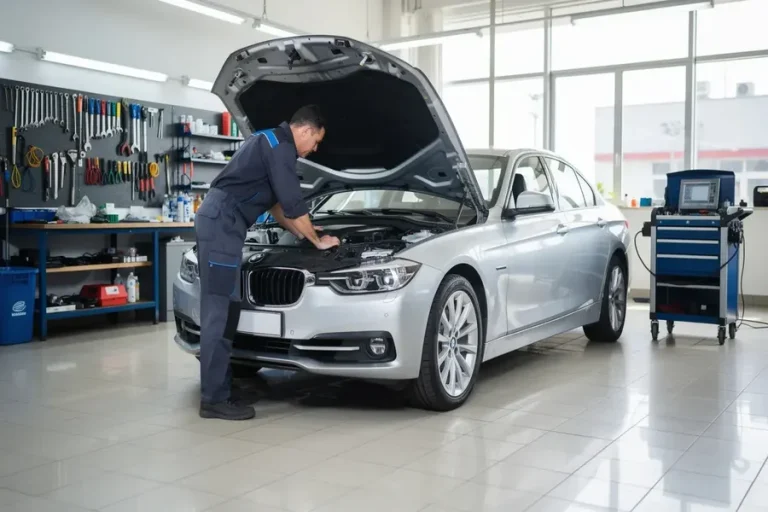
- The frame equipment. Look for a dedicated measuring or straightening system. If the shop can’t show you where structural pulls happen, they’re a dent shop wearing a collision shop’s sign.
- The paint area. A real booth has filtered airflow and a separate mixing room. Paint done in the open air looks fine in the lot and chalky eight months later.
- The parts shelf. Ask what they’ll use on your car. Original manufacturer parts, certified aftermarket, or salvage. Any of those can be legitimate. The red flag is a shop that won’t put the answer on paper before you sign.
- The calibration corner. Cameras, radar, and driver assist sensors need a target board and a level floor to reset properly. No corner, no calibration.
You don’t need to know how to operate any of it. You just need to see that the shop has invested in the right rooms.
Read the estimate like a repair plan, not a price tag
The number at the bottom is the least useful part of the document. Read the line items.
A legitimate estimate names the panels being replaced, the panels being repaired, the paint materials, and the labor hours for each phase. It separates structural time from refinish time, and it lists the recalibration as its own charge. If your estimate is one line that says “front end repair,” hand it back.
Here’s the scenario that separates shops. A driver pulls in with a rear quarter panel dent, and the adjuster’s first pass writes it up as a repair. The shop puts the car on a measuring system and finds the rail pulled six millimeters. That shop now calls the insurer, documents the measurement, and gets the job rewritten. The other shop smooths the dent and sends the car out with a hidden structural fault. Same dent. Two different businesses.
Ask directly: what happens when you find damage the adjuster didn’t write? The answer tells you who works for whom. A shop that pushes back on insurers as a matter of routine is the one you want.
Two questions that expose the shortcuts
Ask who does the final quality check, and ask what happens if you don’t like the paint match. Then listen for ownership language.
The best answer to the first sounds boring: the same person who signs off on every car, every time. The worst answer is a shrug.
The second question is where shops tend to go quiet. Paint matching on a five year old car with sun faded panels is genuinely hard, and a shop that admits it up front, promises a blend into adjacent panels, and offers to reshoot under warranty is telling you the truth about how collision work goes. Under California’s repair act, which is a useful benchmark to read even if you’re in Arizona, customers have a right to a written estimate and to the return of replaced parts. Shops that volunteer paperwork like that tend to be the same shops that don’t panic when a customer asks questions.
Speaking of paperwork: the technicians doing the structural work are the ones who need protective gear and training for the solvents and coatings involved, and the Department of Labor treats that as a core workplace obligation. A shop that is casual about safety rules is casual about torque specs too. Same personality.
What a clean handoff looks like
The delivery should feel like a walkthrough, not a key exchange.
- They walk the car with you and point out the repaired panels before you ask.
- They hand you the repair order with the calibration printout attached.
- They tell you what to watch for in the first two weeks, and they name the exact person to call.
Open and close every door. Check the trunk gaps against the opposite side. Drive it at freeway speed before you leave the lot, because wind noise and pull show up above 50 and nowhere else. If something’s off, say so on the spot. Good shops want that conversation in their driveway instead of a month later in yours.
Pick the shop before you need it
Nobody shops for collision repair calmly, which is exactly why you should do it on a Saturday with a coffee instead of on the shoulder of Loop 101. Save two shop names in your phone. Ask the four shop floor questions once, while the answers don’t cost you anything.
My bias, stated plainly: I’d take a single specialty shop with a frame rack and a calibration board over a big chain with a nicer waiting room every time. The waiting room never fixed a car.
Start with a shop that limits itself to crash work, asks you for the repair plan, and tells you the truth about paint. Your next fender bender will be an inconvenience instead of a saga. Which two shops are you going to check out this month?