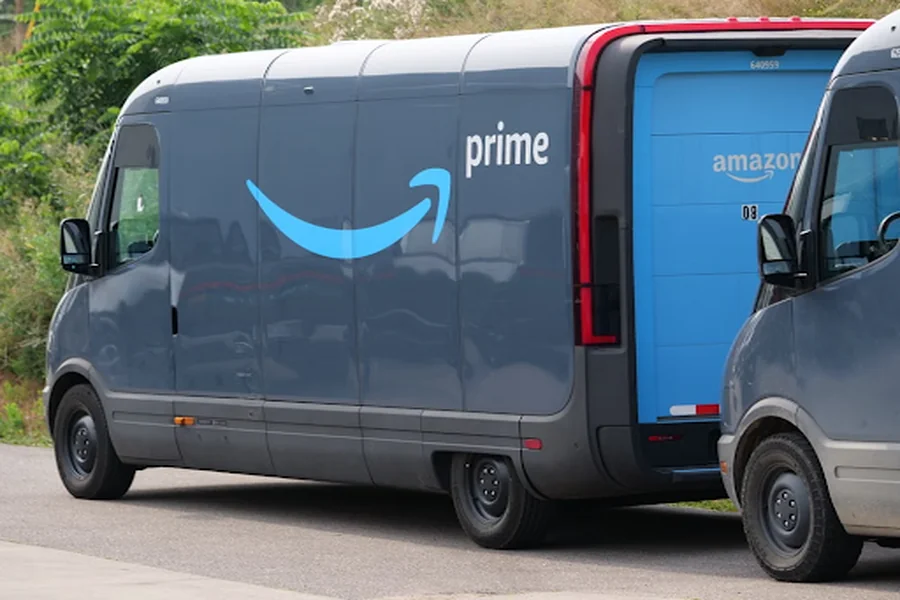
When an individual gets into a collision with an Amazon delivery van, dashcam footage from both or either of the vehicles can play a key role in ensuring the offending party is held accountable and the victim gets appropriate justice and compensation. This is why parties that have a stake in the collision – the drivers involved the crash, their attorneys, Amazon or the contracted Delivery Service Partner (DSP), insurance companies and law enforcement – try to quickly obtain and preserve the dashcam footage after the collision.
For cases involving delivery van accidents, determining liability is not always straightforward. Moreover, Amazon has often attempted to escape liability when any of its vans are involved in a collision, which can make the process of trying to seek compensation for your injuries even more exhausting and overwhelming. However, when dashcam footage is available, it can help reconstruct what actually happened, which in turn, affects the direction of the case.
This article will explore the importance of dashcam footage after a collision, who may obtain it and how dashcam footage can be obtained.
Why is Dashcam Footage Important After a Collision?
When a collision occurs, determining who is at fault can be complicated: memory is not always reliable and statements from the drivers and others present during the accident can conflict. This means the case can turn into a ‘he said, she said’ situation. However, as dashcams capture what had occurred, they remove any ambiguity.
The footage may reveal whether a driver followed traffic laws, maintained a safe distance, and/or reacted appropriately to road hazards. It also looks into external factors that may have influenced the accident, such as traffic flow, condition of the road, weather conditions, and surrounding vehicles. The dashcam can also help prove or refute any claims that either of the drivers are making, regarding their roles in the collision (e.g. speeding, unsafe turns, distracted, etc.) and the how much compensation they should receive.
Who may Obtain the Dashcam Footage?
When a collision occurs, there are multiple parties involved who may obtain the dashcam footage:
- Amazon/Delivery Service Partner (DSP) – It is important to note that Amazon works with many independent DSPs. So, many of the vehicles being used belong to the company, or the driver, instead of Amazon. When an accident involving these vehicles occur, the footage will be most likely stored in the company’s cloud server.
The DPS or Amazon use the footage to evaluate the driver’s behavior and the chain of events leading up to the collision, as well as handle insurance claims. As the footage is private property, the company has complete control of it.
- The drivers (and their lawyers) – The van driver and the other driver may use the footage to give strength to their respective narratives of how the collision occurred and how their injuries have impacted them in the long-term (e.g. medical expenses, lost wages, reduced mobility, etc.)
If the other driver has dashcam footage, their lawyer may submit as evidence for their claims in court and, similar to the company, the video is in their full control.
- Insurance companies – If the insurance company conducts their own investigation, the dashcam footage is useful for determining who is at fault, how much control either of the drivers had in the situation, how severe are injuries, etc.
- Law enforcement – Police use the dashcam footage to accurately document what occurred and see if any traffic violations occurred.
How can the Dashcam Footage be Obtained?
Most dash cams record on a loop, so footage that wasn’t saved as an event can be overwritten. If your car has a dashcam, on the same day, save the memory card and send a copy of the footage to your lawyer, so it can be used in court. Do not selectively delete or edit the footage, as it will appear as tampering with evidence, which is a crime. As this footage may be used in the legal proceedings, the company’s lawyer may file a subpoena to obtain it.
For dashcam footage belonging to Amazon or the DPS, they may be unwilling to hand it over voluntarily. Your lawyer will send a letter requesting the complete accident video, which also functions as a written preservation request. This document will ask them to save the original file and voluntarily provide the full, unedited recording. During the pre-trial discovery process, any evidence that might be useful, including dashcam footage, must be submitted to your legal team as well. If they refuse to share their footage, they may be ordered to do so.
FAQs
- What if Amazon/DPS refuses to release the footage?
According to the law, Amazon/DPS must provide your legal team with the footage as it is important evidence. You may obtain during the pre-trial discovery process or your lawyer may file a subpoena to obtain it.
- Does dashcam footage record the entire shift?
Often no; many cameras record on a loop. Instead, they may only save footage moments before and after the crash.
- Do I have to give my dashcam footage to the police?
Neither you, nor the company, are obligated to submit your footage to the police unless they have a warrant. Inform the officer that you have footage and will provide it through your attorney later.