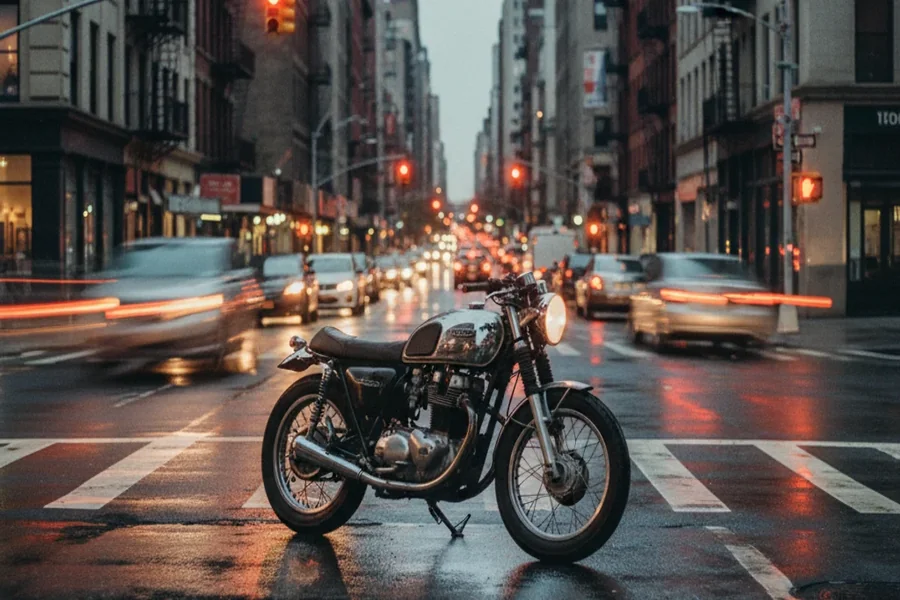
Forty percent. That’s roughly the share of all motorcycle crashes that happen at intersections, according to long-running federal crash data, and it’s the number I want you to hold in your head every time you approach a green light on Old Country Road. You’ve got maybe eight seconds to decide whether the driver waiting to turn sees you. The following guide is about spending those eight seconds well, and about knowing what to do when the worst happens anyway.
Long Island doesn’t ride like upstate. The roads here are wide, fast, and lined with driveways and strip malls, so every intersection carries turning traffic from four directions plus a steady trickle of people pulling out blind. Riders who learn to read that pattern before they commit to the box tend to arrive home in one piece. When a collision does happen, the aftermath is its own problem, and it helps to have a Westbury motorcycle accident lawyer who knows how local roads and local insurers actually behave. But prevention comes first, so let’s start there.
Why intersections punish riders harder than drivers
Cars have a steel cage and a foot of crush space. You have your gear and your attention. The physics don’t negotiate.
Most intersection motorcycle crashes fall into a small set of patterns: a left-turning car that never registered you, a driver rolling through a stop sign, someone pulling out of a parking lot into your lane, and the right-turn-on-red that clips a rider hugging the curb. Notice what these have in common. In every one, the driver was looking but didn’t process what they saw, because a single headlight is easy to misjudge for distance and speed. That’s why the old advice about hi-vis gear only gets you partway. Visibility helps. Predictability helps more.
Federal safety data from the National Highway Traffic Safety Administration has long shown that the vast majority of motorcycle crashes occur in daylight, on dry roads, at low speeds. That should tell you something uncomfortable: this isn’t mostly a night-riding or rain-riding problem. It’s a Tuesday afternoon problem at 35 mph, half a mile from your house.
The Four Corners Walk (my own pre-entry routine)
I made this up after too many close calls on Hempstead Turnpike, and I teach it to anyone who’ll listen. It takes about four seconds and it works because it’s a sequence, not a vibe. Before you enter any intersection where you have right of way, walk your eyes through four corners in the same order every time.
- Opposing left-turner. Watch the front wheels, not the driver’s face. A wheel that starts to rotate tells you the truth about intent a half second before the car moves.
- Right side, cross street. Check for the roll-through, the guy who treats a stop sign as a suggestion. He’s usually looking left, which is right at you.
- Left side, cross street. Same check, opposite direction, plus any driveway mouth within twenty yards.
- Your mirror, once. The tailgater behind you needs about two seconds to stop. If he’s on your rear fender, brake earlier and softer than you normally would so he doesn’t plow into you while you’re already slowing.
Then commit. Rolling off the throttle and covering both levers through the box is the habit that buys you the extra half second. And here’s my strong opinion: take the lane. Riding the right edge to “stay out of the way” puts you exactly where right-turning cars sweep and where drivers entering from side streets look last. You’re better off centered and visible.
Where Long Island’s worst odds cluster
You can’t memorize every intersection, but you can learn the shapes that produce crashes. On Long Island, those are the five-lane arterials with center turn lanes, the service roads running parallel to parkways, and any spot where a big-box parking lot empties directly onto a 40 mph road.
Here’s a concrete scenario. You’re heading east on Route 107 in Hicksville at dusk, approaching the Flag Drive light. A minivan sits in the westbound left-turn bay, and from your angle the setting sun sits right behind it. A novice rider reads a stopped car. An experienced one notices the sun, assumes the driver can’t see anything, and drifts to the right side of his lane while easing off the throttle. That drift won’t save you from a determined turner, but it buys a couple of feet and a couple of tenths, and in a left-turn crash that’s the difference between a swerve and a hospital.
One more piece of local math. According to the Insurance Information Institute, motorcycle claims tend to cost far more per vehicle than car claims, so insurers push back hard and early. Understanding that incentive matters if you’re ever sitting across from an adjuster.
What to do in the sixty seconds after a crash
Nobody plans to need this section. Read it anyway, because the first minute after impact shapes everything that follows.
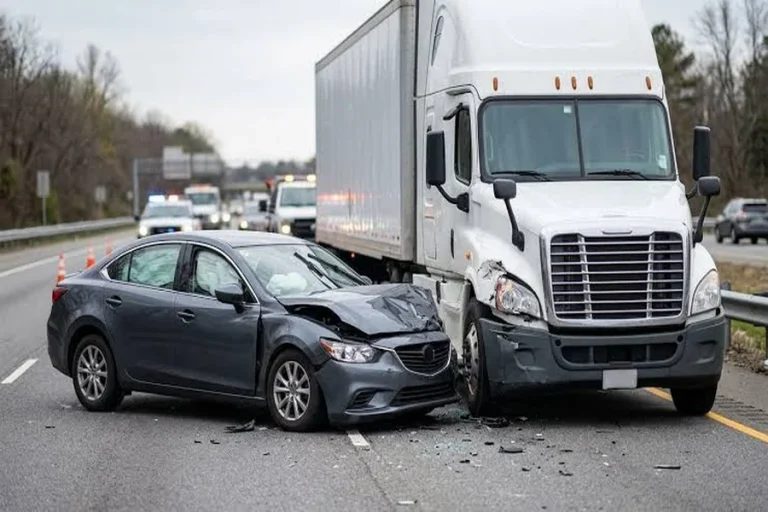
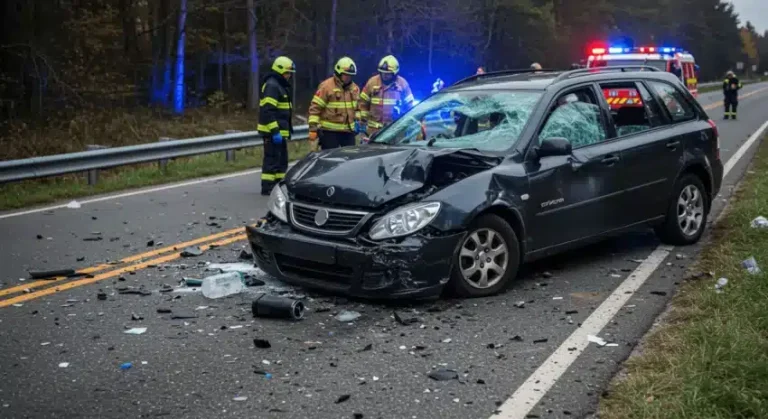
Get out of the travel lane if you can move at all. A downed rider in traffic is a second collision waiting to happen. Call 911 even if you feel fine, since adrenaline can mask injury for hours and the police report anchors the whole claim. Photograph the scene before anything gets moved: vehicle positions, the other driver’s plate, road conditions, traffic signals, your gear. Get names and numbers from witnesses, and yes, write them down on your hand if that’s all you’ve got.
Then say nothing to the other driver’s insurer. Not a recorded statement, not a friendly chat, not a text saying you’re okay. That last one gets quoted back at people constantly.
Riding smarter starts with route choices
You can cut your intersection exposure by picking routes deliberately. Take the two-lane with a light over the six-lane arterial with uncontrolled turning traffic when the time difference is trivial. Avoid the service roads during morning rush. Ride with your high beam on during daylight, which is legal in New York and gets you noticed.
Then spend thirty minutes with the New York State Education Department materials and an honest self-assessment of your own habits. The state’s rider safety resources are free, and they’ll reinforce what you already suspect: attention is the only safety system that reacts in time.
So here’s where this lands. Intersections are the one place on your ride where someone else’s half second of inattention can end your season. The Four Corners Walk keeps your eyes moving in the right order. Taking the lane keeps you where drivers actually look. And if the worst does happen, documenting everything and keeping quiet to the other insurer keeps your options open.
The roads out here are good. Ride them like you expect the other guy to be looking left, and the eight seconds at every green light start working in your favor. Where’s your closest call been this year?