No, a 10-year-old should not sit in the front seat of a car in Minnesota when a rear seat is available. Minnesota law requires children under 13 to ride in the back seat whenever possible. If a vehicle has no available rear seat, a 10-year-old may ride in the front, provided they use the correct restraint and meet the applicable safety requirements.
Minnesota, located in the Upper Midwest of the United States, borders Canada and four states: Wisconsin, Iowa, South Dakota, and North Dakota. Known for its lakes and busy urban roads, the state enforces child passenger safety requirements.
So, how old do you have to be to sit in the front seat in Minnesota? There is no separate minimum age for front-seat passengers, but the under-13 rear-seat requirement matters. Before allowing a 10-year-old to ride up front, parents should understand the exceptions, seat belt requirements, and airbag risks.
When Can a 10-Year-Old Sit in the Front Seat in Minnesota?
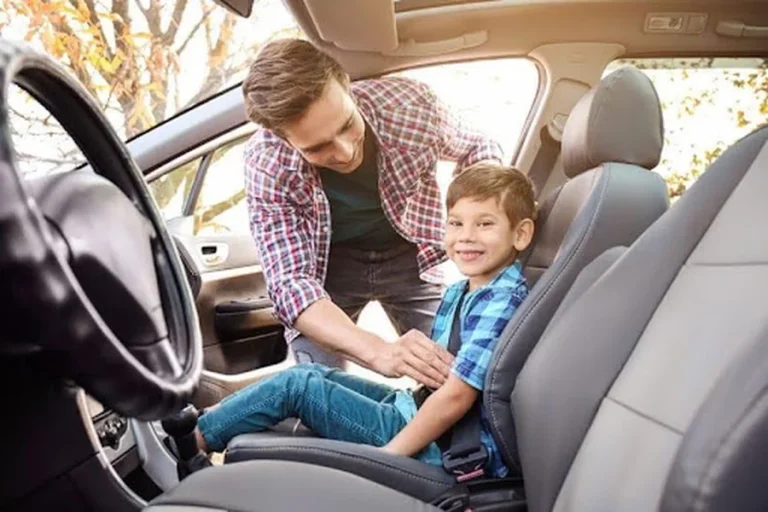
Minnesota law recommends that children under 13 ride in the rear seat. A 10-year-old may sit in the front only when no usable rear seating position is available, such as in a two-seat sports car or vehicle without rear seats. The child must still use an appropriate restraint based on age, height, and weight.
What Laws Govern Front-Seat Rules for Children in Minnesota?
Minnesota Statutes Section 169.685, Subdivision 4a, sets out the state’s child passenger safety requirements.
Under this law, children younger than 13 must ride in the rear seat when one is available. They must also use an appropriate child passenger restraint system, booster seat, or safety belt.
The law also sets specific requirements based on age and size:
- Under 2 years: Children must use a rear-facing car seat until they reach its height or weight limit.
- At least 2 years: Children who outgrow the rear-facing seat must use a forward-facing seat with an internal harness.
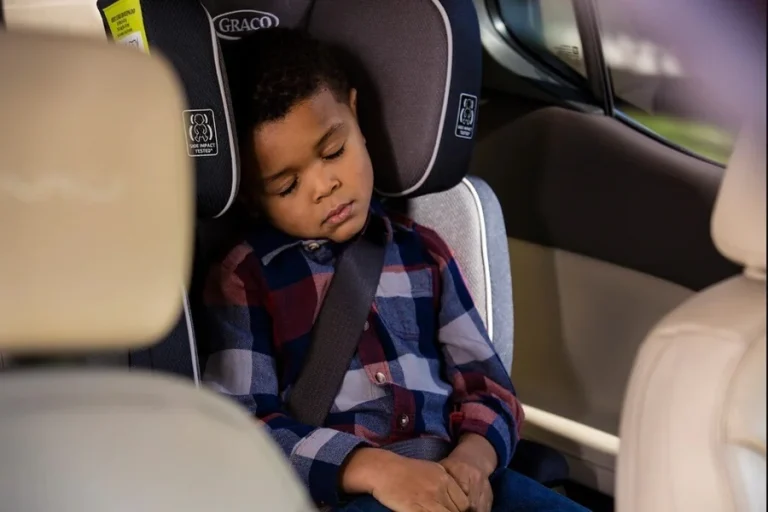
- At least 4 years: Children who outgrow their forward-facing seat must use a booster seat with a seat belt.
- At least 9 years: Children who meet the applicable requirements may use a properly fitted seat belt.
A 10-year-old may therefore use a seat belt without a booster if the belt fits correctly and the child meets the applicable requirements.
What Seat Belt Requirements Apply to a 10-Year-Old?
A 10-year-old may use a regular seat belt if it fits properly under Minnesota Statute § 169.685, Subdivision 4a(a)(4). Check that the child sits back with knees bent, the lap belt rests across the upper thighs, and the shoulder belt crosses the middle of the chest. If the belt does not fit correctly, continue using a booster seat.
What Are the Consequences of Violating Minnesota’s Child Seat Laws?
Under Minnesota Statutes § 169.685, Subdivision 5, violating child passenger restraint requirements is a petty misdemeanor punishable by a fine of up to $50. The court may waive or reduce the fine if the driver provides proof of obtaining a compliant child restraint within 14 days. The driver is responsible for ensuring young passengers are properly restrained.
Frequently Asked Questions
1] Can a 10-year-old sit in the front seat if they are tall?
Height alone does not remove Minnesota’s under-13 rear-seat requirement. Your child should ride in the back when a rear seat is available.
2] Does Minnesota require a booster seat for 10-year-olds?
Not always. Children who are at least nine may use a seat belt if they meet the legal fit requirements. Otherwise, they should continue using a booster seat.
3] Is it safer for a 10-year-old to sit in the back?
Yes. The rear seat offers better protection from front-end crashes and airbag-related injuries. Keeping your child in the back until age 13 is the safer choice.
Final Takeaways
- A 10-year-old should ride in the back seat when one is available in Minnesota.
- Minnesota Statutes Section 169.685, Subdivision 4a, requires children under 13 to use the rear seat when available.
- A 10-year-old may ride in the front when no rear seat is available.
- Children aged nine and older may use a regular seat belt if it fits correctly.
- A booster seat remains necessary if the seat belt does not fit properly.