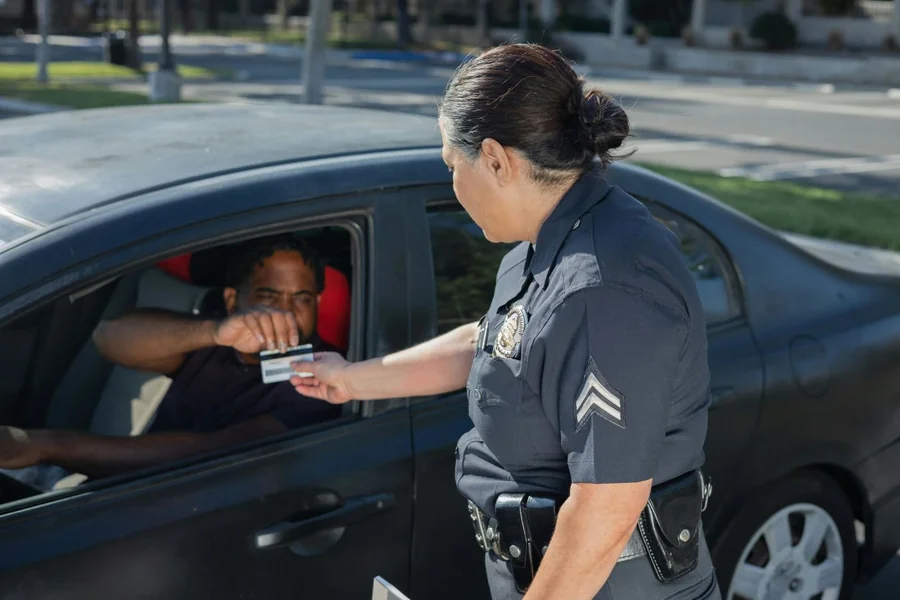
The officer approaches the driver’s window, glances toward the back seat, and notices a toddler strapped into a rear-facing car seat. The stop began with a broken taillight, but the presence of a young passenger may become relevant if the officer discovers signs of impaired driving, dangerous behavior, or an improperly secured child.
Having a child in the vehicle doesn’t automatically turn a routine traffic violation into a criminal investigation. But when an officer has grounds to investigate a more serious offense, the child’s presence can affect the potential charges and consequences. For parents, understanding where those additional risks begin is important.
A Child Passenger Can Raise Additional Safety Concerns
A routine traffic stop generally begins with an observed violation or another lawful basis for stopping the vehicle. An officer may request the documents required by state law, address the reason for the stop, and make observations that could justify further investigation. Simply seeing a child in the back seat doesn’t create reasonable suspicion that the driver has committed another offense.
The situation can change if the officer observes signs of impairment or other potentially unlawful conduct. Slurred speech, the odor of alcohol, or additional evidence of unsafe driving may support further investigation, depending on the circumstances. A child passenger doesn’t automatically lower the legal threshold for a sobriety investigation, but the child’s presence may become relevant if an impaired-driving offense is established.
If the encounter leads to criminal allegations, the driver’s statements and the officer’s observations may become important evidence. “Having a child in the vehicle doesn’t automatically give police additional authority to investigate a driver. The circumstances of the stop and the evidence officers uncover still determine what they can legally do,” explains criminal defense attorney Ryan Anfuso.
Statements made during a stop may become evidence, but their admissibility depends on the circumstances and applicable constitutional rules.
When a Child Passenger Can Mean Additional Charges
Some states impose additional penalties when a person drives under the influence with a child in the vehicle. Others authorize separate child-endangerment charges or enhanced sentencing under specified circumstances. The National Conference of State Legislatures’ overview of impaired driving with child passengers illustrates how widely these provisions can differ.
Depending on the jurisdiction and the facts, prosecutors may consider several types of violations:
- Impaired driving with a minor passenger. Certain states establish a separate offense or sentencing enhancement when a driver is convicted of DUI with a child below a specified age in the vehicle.
- Child endangerment. Some laws address conduct that places a child at an unreasonable or substantial risk of harm. The required level of risk, mental state, and relationship to an underlying driving offense vary.
- Reckless driving or endangerment. Particularly dangerous conduct may support an additional charge when its statutory elements are satisfied, although a child’s presence alone doesn’t necessarily establish that offense.
- Child-restraint violations. An improperly secured child may lead to a separate traffic citation under the state’s passenger-safety requirements.
These charges aren’t automatic, and not every jurisdiction permits multiple convictions or punishments based on the same conduct. Prosecutors must establish the elements of each offense, and some statutory provisions restrict how related charges may be combined.
The Car Seat May Become a Separate Issue
A child’s presence can also draw attention to whether the restraint complies with state law. Officers may notice an obvious issue, such as a young child riding without an appropriate restraint or a seat belt that isn’t being used. Whether an officer may conduct a more detailed inspection during a particular stop depends on the applicable law and circumstances.
Child-passenger safety laws typically address the child’s age, size, and required restraint, but the details differ significantly between states. A restraint that satisfies the minimum legal requirement may not reflect current best practices, and not every installation mistake is necessarily a separately ticketable violation.
The National Highway Traffic Safety Administration recommends keeping children rear-facing until they reach the height or weight limit allowed by their seat’s manufacturer, followed by an appropriate forward-facing restraint and, eventually, a booster seat. Parents should follow both the manufacturer’s instructions and the law in their state rather than assuming the same requirements apply everywhere.
How Much Can a Child Passenger Affect the Penalties?
The consequences depend on the underlying offense, the child’s age, the driver’s history, and the jurisdiction. Some states impose mandatory additional fines or jail terms for DUI convictions involving minor passengers. Others treat the circumstances as an aggravating factor or allow prosecutors to pursue a separate child-endangerment offense.
The presence of a child doesn’t necessarily increase every penalty. A broken taillight citation doesn’t ordinarily become more serious simply because a toddler is riding in the back. Even in impaired-driving cases, the applicable statute determines whether additional punishment is available and what the prosecution must prove.
Potential consequences can extend beyond criminal sentencing. Certain incidents may result in a report to child protective services, and an arrest or conviction could become relevant in a family-court proceeding. Those outcomes aren’t inevitable, and a child welfare investigation is separate from a criminal prosecution. The facts and governing laws determine whether further action is warranted.
What Parents Should Know During the Stop
A traffic stop can become stressful when a child is present, particularly if the officer begins asking questions beyond the original violation. Drivers can protect their rights without escalating the encounter or interfering with legitimate safety concerns.
Several practical steps are worth understanding:
- Keep required documents accessible. Drivers generally must provide a license, registration, and proof of insurance when legally requested, subject to state requirements.
- Follow lawful instructions. Remain calm, keep hands visible, and avoid reaching toward the back seat unexpectedly. Explain if a child needs immediate attention.
- Understand the right to remain silent. Drivers generally don’t have to answer investigative questions about drinking or other potentially incriminating conduct, although identification requirements and other legal obligations still apply.
- Seek legal advice when criminal charges are involved. A lawyer can assess the stop, the evidence supporting each charge, and any consequences involving driving privileges or family matters.
A child in the back seat doesn’t give an officer unlimited authority to investigate the driver. But when a traffic stop reveals evidence of impaired or dangerous driving, the presence of a young passenger may create legal issues that wouldn’t exist otherwise.
Understanding those distinctions helps parents recognize when a routine citation has become a more serious matter.