Key Takeaways
- Match the SUV to your real daily routine before narrowing down brands or features.
- Compare passenger room, cargo space, parking needs, fuel use, and drivetrain options.
- Budget for ownership costs, not just the vehicle’s advertised price or monthly payment.
- Review the SUV’s history, recall status, condition, and paperwork before signing.
- Use a thorough test drive and independent inspection to avoid costly surprises.
Finding the right SUV in Tulsa is about more than choosing a popular badge or a sharp-looking trim. Your vehicle needs to work for the daily commute, school pickup, grocery runs, weekend plans, and longer Oklahoma road trips. When comparing used SUVs for sale in Tulsa with low mileage, start with how the vehicle will actually fit your life instead of focusing only on its price or appearance.
A compact SUV may feel ideal for parking around town, while a larger model may make more sense for a growing family, regular passengers, or bulky cargo. The best choice is the one that feels manageable on ordinary days and remains affordable after fuel, insurance, maintenance, and repairs are included.
Table of Contents
- Start With Daily Use
- Choose the Right SUV Size
- Build a Complete Budget
- Compare Fuel Economy and Drivetrains
- Review Safety Features and Recall History
- Inspect the SUV’s Condition
- Make the Test Drive Count
- Review the Paperwork
- Use a Final Checklist
1. Start With Daily Use
Think through a normal week before you compare models. How many people ride with you most days? Do you need room for sports gear, work equipment, a stroller, pets, or home-improvement supplies? Will you spend more time in city traffic, on highways, or on unpaved roads? If towing is part of the plan, confirm the specific SUV’s towing equipment and rating rather than assuming every version can handle the same load.
A larger SUV can provide useful space, but it can also require more room in a garage, at a parking lot, and at the fuel pump. Measure your garage opening if space is tight, and bring everyday items such as a child seat or cargo container when viewing vehicles.
2. Choose the Right SUV Size
Subcompact and Compact SUVs
Subcompact SUVs are often easier to park and maneuver. Compact SUVs offer flexibility for commuters and small families while typically remaining manageable in tight spaces. Look beyond the exterior size by checking rear-seat room, liftgate opening height, and whether the cargo floor is practical for the items you carry.
Midsize and Three-Row SUVs
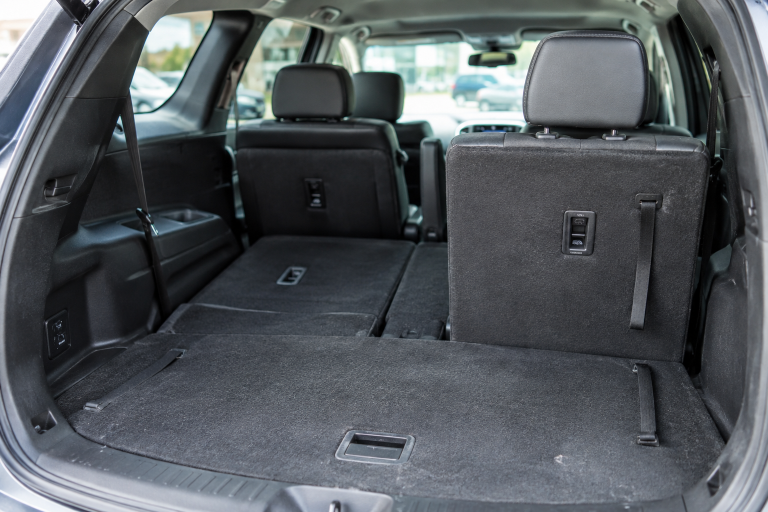
Midsize SUVs can offer more passenger comfort and cargo capacity for longer drives. Three-row models can be useful when extra seating is needed regularly, but the third row may limit cargo space when it is in use. Sit in every seating position, including the third row, before deciding that it will work for your household.
3. Build a Complete Budget
The purchase price is only the starting point. A realistic budget should include the down payment, sales tax, registration, loan interest, insurance, fuel, routine service, tires, brakes, and a reserve for unexpected repairs. A lower-priced SUV is not automatically the better value if it needs major work soon after purchase.
If financing, compare the total amount paid over the loan term, not just the monthly payment. Longer loans can make a payment look smaller while increasing the amount of interest paid. Ask for an out-the-door price in writing so you can compare vehicles on the same basis.
4. Compare Fuel Economy and Drivetrains
Front-wheel drive is common and may be suitable for many daily driving needs. All-wheel drive can provide additional traction in certain conditions, but it may add weight, complexity, and maintenance considerations. Four-wheel drive is generally intended for vehicles designed for more demanding off-road or towing use. Choose the system that matches where and how you will drive.
Also compare gasoline, hybrid, plug-in hybrid, and electric SUV options based on your expected mileage and access to charging. Fuel economy can vary within the same model because of engine choice, drivetrain, wheel size, and equipment. Even a modest difference in efficiency can matter when you drive a long commute every week.
5. Review Safety Features and Recall History
Features such as automatic emergency braking, blind-spot monitoring, lane-departure alerts, adaptive cruise control, parking sensors, and backup cameras can make daily driving easier. However, equipment often varies by trim level and optional package. Confirm what is installed on the exact SUV you are considering.
Before making an offer, use the VIN recall lookup tool to see whether the specific vehicle has any unrepaired safety recalls. A vehicle history report can be helpful, but it should not replace inspection or recall research.
6. Inspect the SUV’s Condition
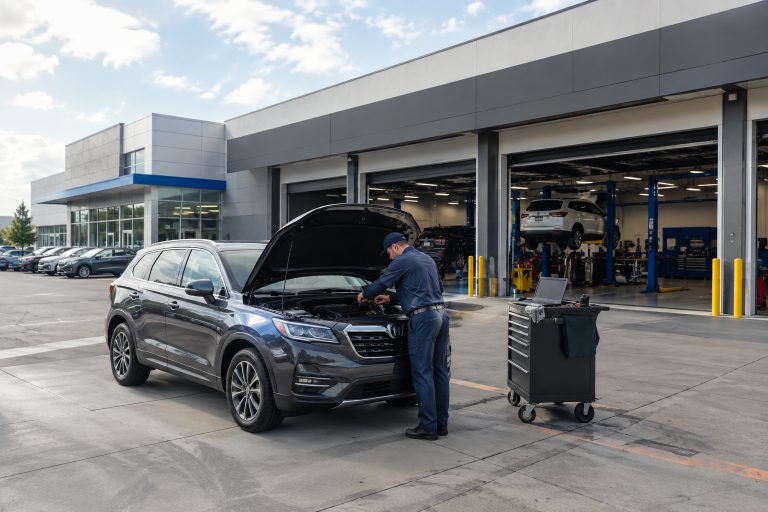
Walk around the SUV in daylight and look closely at the paint, body panels, glass, tires, and underbody. Mismatched paint, uneven panel gaps, fluid leaks, unusual rust, or uneven tire wear can justify further questions. Inside, test the lights, windows, locks, climate controls, touchscreen, seat adjustments, and driver-assistance features.
A clean interior does not prove the vehicle is mechanically sound. Compare the cabin’s wear with the reported mileage and service records. An independent mechanic can identify concerns that may not be obvious from photos or a short drive.
7. Make the Test Drive Count
Start the SUV when the engine is cold if possible, then listen for unusual knocks, rattles, grinding, or exhaust noise. Drive on both neighborhood streets and faster roads when conditions permit. Pay attention to steering response, braking, transmission shifts, visibility, seat comfort, cabin noise, and warning lights.
Imagine a Tulsa buyer who likes the extra room of a three-row SUV but discovers during the test drive that it feels difficult to park at work. Another buyer may find that a compact model is easier to handle but cannot hold regular family cargo. Those discoveries are valuable before a purchase, not afterward.
8. Review the Paperwork
Match the vehicle identification number on the SUV with the paperwork. Review title status, ownership history, service records, accident or flood information, warranty details, financing terms, annual percentage rate, return policy, and every item included in the out-the-door price. The FTC’s guidance for buying a used car from a dealer explains why Buyers Guides, written promises, independent inspections, and careful financing comparisons matter.
9. Use a Final Checklist
- Does the SUV fit your daily driving routine in Tulsa?
- Are the seating, cargo area, and parking needs realistic?
- Can you afford the complete ownership cost?
- Does the drivetrain and fuel type suit your expected mileage?
- Have you confirmed the specific safety features?
- Is the vehicle history consistent with its condition?
- Have you checked for open recalls by VIN?
- Has an independent inspection been completed?
- Are the final price, warranty, and financing terms in writing?
- Does the SUV feel comfortable and predictable on the road?
Conclusion
Finding the right used SUV in Tulsa means balancing everyday practicality with condition, comfort, and long-term ownership costs. Compare vehicle sizes, cargo capacity, fuel economy, safety features, and maintenance needs before narrowing your choices. Then verify the vehicle history, check for open recalls, arrange an independent inspection, and take a thorough test drive. By looking beyond mileage and advertised price, you can make a more confident decision and choose an SUV that fits your routine and budget.