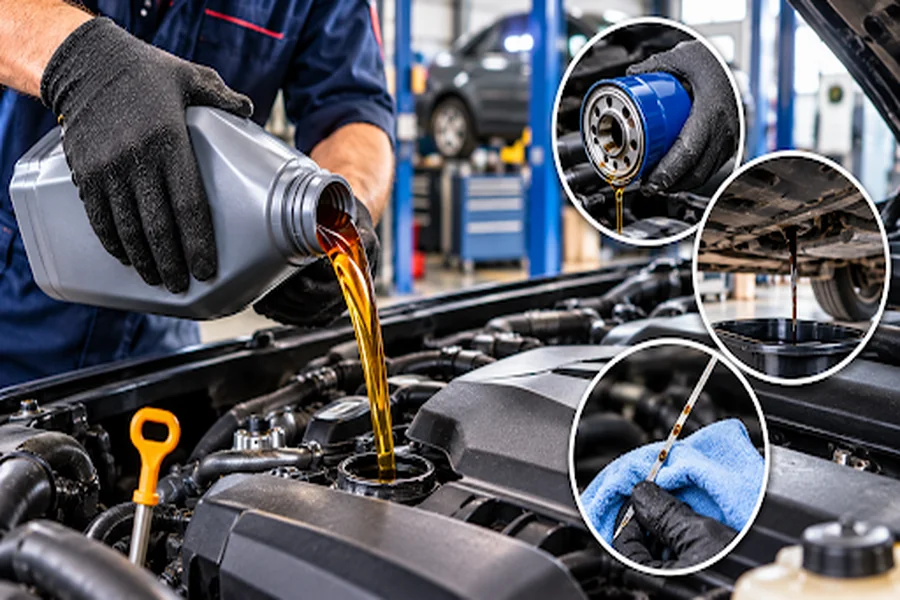
Engine oil is the blood of the engine of your car. In today’s vehicles, an oil change does more than lubricate and cool. It must operate at high temperatures and pressures, clear combustion residues, abrasion, acids, water, and fuel particles, prevent corrosion, and keep everything leak-free.
An oil change is well worth it when done regularly. It minimises wear and tear and keeps your engine clean, so you can enjoy your car for years to come. Easy: Just drain the old oil and change to new oil and a new filter.
1. Importance of Changing Your Oil Regularly
Just adding more fresh oil will NOT provide adequate lubrication and engine protection. The only way to ensure safe engine operation and extended engine life is to replace old or used oil with new oil regularly.
If it is neglected, it will allow deposits to form from the burning residues and, over time, can cause big effects like:
- Increased consumption of fuel and oil.
- Weakened lubrication.
- Oil which is no longer effective at lubricating all parts of the engine.
- Increased wear and potential damage to the timing chain and/or engine due to the timing chain breaking and/or engine wear.
- Worn and contaminated oil that is not able to lubricate the interior of the engine.
2. What Oil Change Entails
If you understand what an oil change service involves, you’ll have a better idea of what to expect during this visit. These are some of the essential features of a great service:
- A used oil filter will be replaced.
- Putting the proper oil in the car’s engine, of the appropriate grade and type.
- Checking the oil level and for leaks.
- Checking fluids such as coolant and brake fluid.
- Assessing engine performance.
- Using the latest diagnostic equipment to run computerized fault diagnosis.
3. Vehicle Maintenance Services
If you prefer to let the professionals handle the job, an expert Edmonton oil change service can complete the task in no time and even examine various other key systems during the appointment.
- A full-service oil change Edmonton company may also offer:
- Comprehensive vehicle inspections
- Maintenance that is done on a regular basis or for prevention.
- Inspections of brakes and suspension components.
- Air conditioning and electrical-related repairs
- Body repair and paint protection services will be done at the same time.
- It offers ignition and engine performance diagnostics.
- The upkeep of manual, automatic and electric vehicles.
4. Oil Change Instructions
As a car goes through use, oil slowly deteriorates. Reduces effectiveness when used as a lubricant for the engine and gathers dirt and grime. An oil change eliminates that old oil and gets rid of it with fresh, healthy oil to get the engine running at its best.
If you’re going to do it yourself, here are some steps to follow:
a. Raise the Vehicle
In order to access the oil pan drain plug, you must get under the vehicle. Roll or jack up to position on ramp and set jack stands under vehicle.
b. Put Catch Pan in Place, Extract Plug
Determine the size of the pan big enough to hold all the oil that is to be drained, and place the pan properly as the plug is removed, it stays below the oil. To remove this, loosen the drain plug with a socket wrench and gently pull it out, avoiding any possible falls into the draining oil.
c. Check the Oil Drains of the Vehicle
This should take only a few minutes, so now it’s time to check the entire vehicle.
d. Replace the Plug and Tighten It
Clean and dry the oil pan threads and check the drain plug threads, changing the plug if necessary. Drain the oil, then install the oil plug and tighten it to the specifications in the owner’s manual with a socket wrench.
e. Dispose of the Used Oil Filter
Look for the filter and get rid of it. This can be done by hand, but a special type of filter wrench may be required to loosen the cap. The filter will usually have some oil in it, and an appropriate removal process must be used, depending on where the filter came from.
f. Clean up and change the old Ring on the Mount
Be sure to remove the ring from the initial filter, and clean up any old gasket material.
g. Lubricate the Filter and Hand Attach it
Put a small amount of fresh oil in the ring area of the newly fitted filter to ensure smooth installation, and then hand-screw the filter onto the mounting plate. Filters are usually tightened until the ring comes in contact with the engine, according to the filter instructions.
h. Fill the Cap and Add the New Oil Should
Check your owner’s manual for the right quantity and volume requirements of your vehicle. Take off the engine oil filter cap and fill with the specified amount via a funnel.
i. Switch the ‘Filter Cap’ and ‘Start the Engine’
Wait at least 30 seconds, and check the drain plug for leaks. If you see any leaks, immediately stop the engine and get them fixed.
j. Shut off the Car, Lower it and Look at the Dipstick
Allow engine to cool for at least 30 seconds after the engine is stopped, to allow the oil to calm. After the vehicle has been lowered, get rid of the dipstick and clean it with a piece of cloth, then reinstall the dipstick to the full mark.
Remove it and inspect the level of oil versus the dipstick operating range and refill with oil, if needed, until the oil level is at the recommended oil level listed in the owner’s manual.