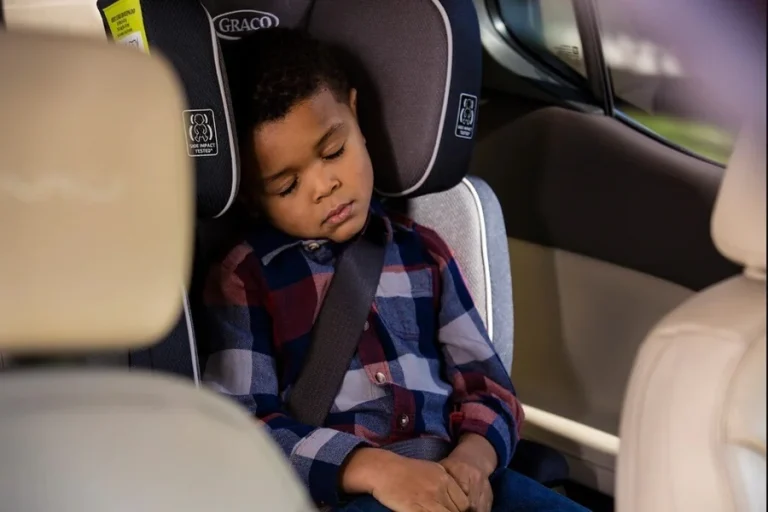
Possibly. Whether you receive a ticket depends on your state’s child passenger safety laws, your child’s age and size, and the restraint being used. There is no single nationwide front-seat age rule that applies to every situation.
A short drive may seem harmless when a child asks to sit beside the driver. However, front passenger airbags can cause serious injuries to young children, particularly during collisions. The back seat generally provides better protection for younger passengers.
Using the correct car seat or booster and following passenger safety recommendations can reduce the risk of serious injury in a car accident. Before allowing your child to ride in front, understand your state’s requirements and the vehicle manufacturer’s safety instructions.
When Can a Child Sit in the Front Seat?
State Laws May Differ
All 50 states and the District of Columbia have child passenger restraint laws, but requirements vary according to age, height, weight, and seating position. Some states specifically require younger children to ride in the back seat, while others primarily regulate the type of restraint used.
Violating applicable requirements may result in a traffic citation or fine. The Governors Highway Safety Association provides an overview of child passenger laws across the country.
Safety Recommendations Versus Legal Requirements
The National Highway Traffic Safety Administration recommends that children under 13 ride in the back seat. This recommendation is not necessarily the same as a state’s legal minimum age for front-seat passengers. Following safety recommendations provides additional protection even when local laws permit earlier front-seat use.
Why Is the Front Seat Riskier for Children?
Passenger Airbags Can Cause Serious Injuries
Front airbags deploy with considerable force. A young child sitting too close to the dashboard can suffer serious injuries during deployment. Never place a rear-facing car seat in front of an active passenger airbag.
Adult Seat Belts May Not Fit Properly
Children who are too small for adult seat belts may experience injuries if the lap belt crosses their stomach instead of their upper thighs. A booster seat helps position the belt correctly across the chest and hips.
What Laws and Safety Rules Should Parents Know?
State child passenger laws determine which restraints children must use and whether front seating is restricted. Federal safety standards regulate child restraint systems, but they do not establish one universal age at which every child can sit in front.
Parents should check their state’s motor vehicle agency for current requirements, exceptions, and penalties. The NHTSA child passenger safety guidance also explains appropriate seating and restraint practices.
What Steps Should You Take Before Letting Your Child Ride in Front?
- Check your state’s child passenger and seat-belt laws.
- Keep children under 13 in the back seat whenever possible.
- Use a car seat or booster appropriate for your child’s height and weight.
- Follow the vehicle manufacturer’s passenger airbag instructions.
- Ensure the lap belt rests across the upper thighs and the shoulder belt crosses the chest.
Frequently Asked Questions
- Can I get a ticket if my child wears a seat belt in the front?
Possibly. A seat belt alone may not satisfy your state’s child restraint or rear-seat requirements.
- Is it illegal for a 10-year-old to sit in the front seat?
It depends on the state. Even where local law permits it, the back seat is generally the safer option.
Key Takeaways
- You may receive a ticket depending on your state’s laws and your child’s circumstances.
- Child passenger requirements differ across U.S. states.
- NHTSA recommends keeping children under 13 in the back seat.
- Never place a rear-facing car seat in front of an active airbag.
- Use the appropriate car seat, booster, or seat belt for your child’s size.