The United Arab Emirates is one of the most car-centred places on the planet. Petrol is cheaper than in most of Europe, highways are wide and well lit, and the car remains the main way to get around despite the steady growth of the metro. Supercars share lanes with pickups, family SUVs and delivery vans, and the local road culture has its own rhythm that newcomers need a few days to understand. Whether you have just bought a car, borrowed one from friends or made a short-term rent a car in Dubai booking for a visit, it helps to know how local roads, rules and climate affect both the driver and the machine.
Roads built for volume
Sheikh Zayed Road, the main artery of Dubai, widens in places to six lanes in each direction. Interchanges are multi-level and exits come quickly, so the most common mistake of new drivers is crossing several lanes at the last moment. Navigation apps help, but it is better to check the route before setting off and move into the correct lane well in advance. If you miss an exit, simply continue to the next one: the detour is usually just a few kilometres.
Tolls are collected automatically. Salik system gantries on major highways scan the tag placed on the windshield – eliminating the need for barriers or toll booths – and the fee is deducted from the account linked to the vehicle. Paid parking zones are marked with appropriate signage, and payment can be made via a mobile app or at a parking meter.
Speed limits are typically 60-80 km/h in town and 100-120 km/h on most highways, while some roads in Abu Dhabi allow 140 km/h. Cameras are everywhere and fines are issued automatically. Lane discipline matters too: the left lane is for overtaking, and tailgating is penalised.
What heat does to a car
Summer temperatures in the Emirates regularly reach 45 °C in the shade, and the asphalt gets much hotter. This affects almost every system of the car.
- Tyres. Pressure rises as the tyre heats up, and rubber ages faster under strong ultraviolet light.
- Battery. In hot climates, car batteries often last only two or three years and frequently fail unexpectedly. A quick check at a service station before the start of summer can help avoid a host of problems.
- Cooling and air conditioning. The engine cooling system and the AC compressor work at full load for months. Coolant level, radiator cleanliness and the cabin filter are worth checking more often than the service book suggests.
- Cabin. The interior of a parked car can heat up beyond 70 °C. Lighters, aerosols, power banks and plastic water bottles should never be left inside, and a windscreen sunshade really works.
Another factor is dust. Fine sand clogs air filters and acts like sandpaper on the paintwork, so you shouldn’t wipe a dusty car with a dry cloth, it needs to be rinsed with water first. Many owners also apply heat-shielding film to the windows (within legal tinting limits), which significantly lowers the interior temperature.
Choosing the right car for the Emirates
It’s no coincidence that SUVs and crossovers dominate the local roads: they feature a high seating position, powerful air conditioning, a spacious interior, and a roomy trunk, as well as sufficient ground clearance for parking on unpaved surfaces. Sedans and compact cars are convenient for everyday city driving and are much easier to park in busy areas. Convertibles are popular from November through March, when temperatures hover around 25 °C, in the summer, however, the top must be kept closed for safety reasons.
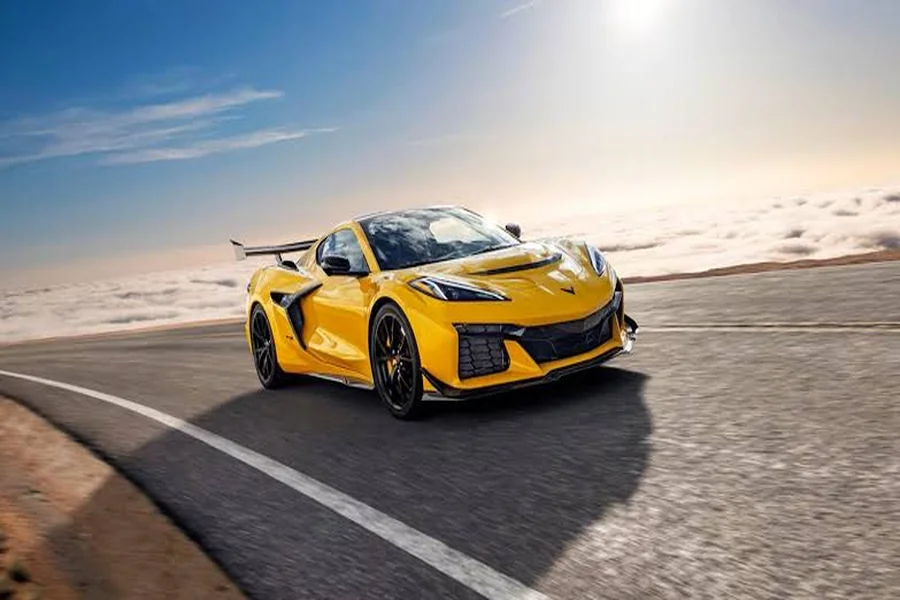
And then there are sports cars. Dubai is one of the few cities where seeing a Porsche, Lamborghini, or Mustang in the next lane is more of a common occurrence than a rare sight. Many car enthusiasts come here specifically to drive models they’re unlikely to ever see back home, which is precisely why sport car rental in Dubai have become a distinct niche in the local automotive market. Given strict speed limits, the real pleasure of driving these cars lies not so much in their top speed as in their acceleration, sound, and handling – and the best place to experience this is in the mountains.
Mountain roads and how to drive them
The road up Jebel Hafeet near Al Ain climbs for around 12 km with some 60 bends and is often named among the world’s great driving roads. Jebel Jais in Ras Al Khaimah, the highest point of the country, offers an even longer serpentine. Both roads are well surfaced, but the descent is where mistakes happen. Select a lower gear or the manual mode of an automatic gearbox to let the engine do part of the braking, and avoid riding the brake pedal all the way down: overheated pads and fluid can lose efficiency exactly when they are needed most. Watch for cyclists in the early morning and for slow trucks on the climb.
Rules that surprise newcomers
- There is zero tolerance for alcohol: any detectable amount in the blood is an offence with heavy penalties.
- Seat belts are mandatory for everyone in the car, including rear passengers. Children under ten or shorter than 145 cm must not sit in the front seat, and young children need a proper child seat.
- Using a phone while driving is fined, and so is stopping on the hard shoulder without a real emergency.
- In a sandstorm or fog, slow down, switch on dipped headlights and increase the distance, police ask drivers not to use hazard lights while moving.
- Rain is rare, which is exactly why it is dangerous. Oil and dust build up on the asphalt, and the first shower makes it slippery. Avoid flooded underpasses: water can damage an engine in seconds.
- Driving onto sand dunes in an ordinary passenger car is a bad idea. Desert driving requires a properly equipped 4×4, lowered tyre pressure and experience.
Driving in the Emirates becomes comfortable once you understand its logic: plan lane changes early, respect the cameras, look after the car in the heat and save the enthusiasm for mountain roads. Then the wide highways, the evening skyline and the climb up Jebel Hafeet turn into one of the most memorable parts of any stay in the country.